
 Written by
Social security – evidence – appeal gateway
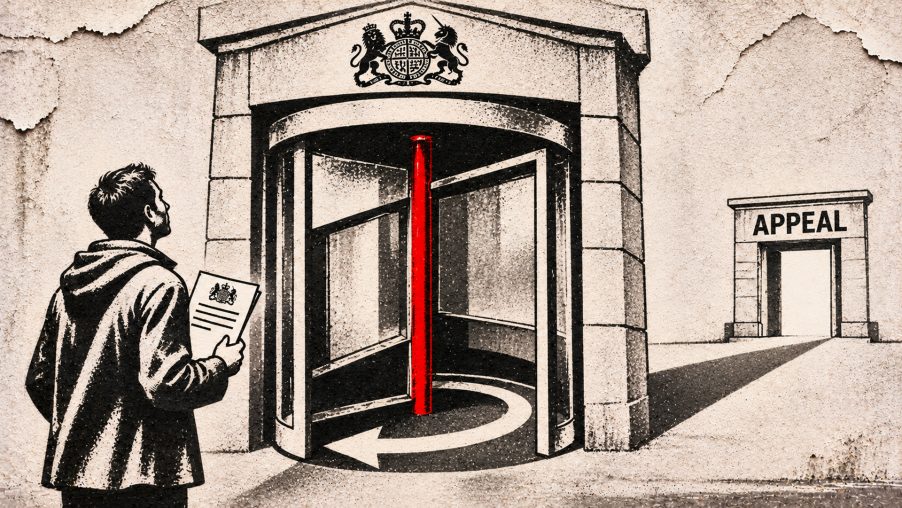
A benefit refusal or reduction usually begins with a challenge to the decision maker, not an immediate tribunal appeal. Mandatory reconsideration is normally the gateway, although the decision letter may say that an appeal can be made straight away. The useful challenge identifies the disputed finding, supplies focused evidence and protects the normal one-month window.
Snapshot
Mandatory reconsideration is both an opportunity to correct a benefit decision and, in most cases, a procedural stage that must be completed before an appeal. Its value depends on precision. A request that says only “I disagree” leaves the decision maker to guess what needs revisiting; a request that connects one finding to one piece of evidence gives the reconsideration a workable structure.
The normal route, and its exceptions
Mandatory reconsideration is not a formality to endure before the real argument begins. It is the first opportunity to correct the factual record and put relevant evidence before the decision maker. A focused request may resolve the dispute without an appeal; if it does not, that work should make the eventual appeal clearer.
GOV.UK says that a person usually needs mandatory reconsideration before appealing a benefit decision, but the original decision letter will say if an immediate appeal is permitted. That exception matters. The letter is the first route map, not an envelope to discard after reading the outcome. Some decisions also have different challenge processes, so the benefit and the wording of the particular notice need to be checked.
The Social Security and Child Support Tribunal is independent of government and listens to both sides before deciding an appeal. Reconsideration is different: the benefits office that gave the original decision reconsiders it. Keeping those institutions distinct helps the claimant choose the right document at each stage. A request for reconsideration should ask for a decision to be revised; an appeal should explain the grounds on which the tribunal is asked to interfere with the reconsidered decision.
Define the disputed finding before drafting
Start with the decision letter and separate the outcome from the findings that produced it. A reduction in an award is an outcome. The disputed finding might be an income figure, a date, a conclusion about daily living or mobility, or a finding that a work-related requirement was not met. The request becomes more useful when it identifies that finding exactly and explains whether the complaint is that evidence was missed, a fact was misunderstood or the reasons do not support the conclusion.
A chronology can help, but it should not bury the issue. Put the decision date and disputed passage first, then state the correct finding and why. Where the reasoning is unclear, ask the benefits office dealing with the claim for an explanation. A telephone explanation does not replace a careful check of the deadline.
For Universal Credit, Personal Independence Payment, Jobseeker’s Allowance and Employment and Support Allowance decisions under the 2013 Regulations, requesting a written statement of reasons can produce a limited additional 14-day period for a revision application. The precise extension depends on when the statement was requested and provided; it is not a fresh one-month period in every case. The safest practice is to request reasons promptly and diarise the original deadline while waiting.
A workable dispute has three parts: the finding challenged, the correct position as the claimant understands it, and the document or explanation that connects the two.
Build the request around evidence
A request can be made through a Universal Credit journal where available, by telephone, by letter or by returning the mandatory reconsideration form. GOV.UK asks for the original decision date, name and address, date of birth and National Insurance number, together with an explanation of what is wrong and why. A written request provides a record that can be checked and reused. Keep a copy, note when and how it was sent, and retain proof of posting or submission.
Evidence should do a defined job. A payslip may answer an earnings issue; a focused clinician’s letter may address how a condition affects an activity. The covering explanation should say what each document proves and which part of the decision it addresses. Volume is not a substitute for relevance.
Official guidance gives new medical evidence, specialist or care reports, bank statements and payslips as examples of potentially supporting evidence. It says to include evidence not already sent and warns that general condition factsheets, routine appointment material and future test letters may not help. That does not make any category automatically decisive. The question is always whether the document bears on the disputed finding at the relevant time.
Use the decision letter’s wording and date so the target is unambiguous.
Explain concisely what the decision maker is being asked to accept instead.
Identify the document, its date and the fact it supports.
Keep the request, evidence list and submission receipt together.
One month, and the strict route for late challenges
GOV.UK says mandatory reconsideration usually must be requested within one month of the date on the decision letter. A letter or form must arrive by that date; posting it on the last day is not the same as ensuring receipt. Whatever method is used, the claimant should record what was done. If the letter is missing, contact the office where the benefit application was made rather than allowing the date to pass unnoticed.
A late request needs more than an argument that the original decision was unfair. Under regulation 6 of the 2013 Regulations, the applicant must ask for an extension at an appropriate office, explain why it is sought and identify the decision. The application must be made within 12 months of the latest ordinary revision date. The Secretary of State must be satisfied both that an extension is reasonable and that special circumstances made it impracticable to apply in time. The longer the delay, the more compelling those circumstances must be. A refused extension application cannot be renewed.
Those cumulative conditions are not a promise that a sympathetic explanation will succeed. A late request should explain what prevented an earlier application, when the obstacle ended and which documents support that account. The reasons for disputing the decision still need to be included.
What happens to payments meanwhile
There is no single answer that can safely be applied to every benefit. GOV.UK explains that the whole benefit claim will be looked at again and that benefit may stop, stay the same, increase or decrease following mandatory reconsideration. It would therefore be wrong to assume that asking for reconsideration freezes every part of the original award or guarantees payment at the previous level while the claimant waits.
Check the payment position for the particular decision and ask what support is available. For a Universal Credit sanction, for example, a claimant who cannot pay for rent, heating, food or hygiene needs can ask for a hardship payment; that payment is repayable through later Universal Credit payments. A recoverable hardship payment is not restoration of the disputed amount.
Benefit-specific exceptions can also affect the route itself. Current DWP statistics guidance explains that mandatory reconsideration has been discontinued for an ESA claimant found fit for work after a work capability assessment where the claimant would qualify for ESA payment pending appeal. Not all claimants qualify, and the exception does not cover every kind of disallowance, including failure to return a questionnaire or attend an assessment. This is another reason to follow the appeal wording in the actual decision letter rather than a general assumption.
The notice that unlocks an appeal
After reconsideration, the benefits office issues a mandatory reconsideration notice stating whether the decision has changed and explaining the reasons and evidence relied on. Read that notice against the original request. Which disputed finding has been accepted, rejected or left unanswered? The comparison helps turn an adverse outcome into clear appeal grounds rather than simply repeating that the claimant disagrees.
Where mandatory reconsideration applies, an appeal cannot be made to the Social Security and Child Support Tribunal until the notice has been received. The Tribunal Rules ordinarily require the appeal to reach the tribunal within one month after the notice of the reconsideration result was sent. The notice of appeal must state the grounds relied on and be accompanied by a copy of the mandatory reconsideration notice. That is a new timetable. Do not assume that the date of the original benefit decision or the date of the reconsideration request calculates it.
Late appeals have their own strict mechanism. A late notice of appeal must request an extension of time and explain why it was not provided in time; unless the tribunal extends time, it must not admit the appeal. For social security and child support cases, an appeal made within 12 months after the ordinary appeal period is treated as in time unless the tribunal directs otherwise and neither the decision maker nor another respondent objects. The tribunal cannot extend time by more than 12 months beyond that ordinary period. The explanation and supporting chronology therefore matter from the outset; delay is not cured merely by completing the appeal form.
The lesson is consistent across both stages: preserve the decision, identify the finding, connect the evidence and keep every date visible. A disciplined request can define the case the independent tribunal is eventually asked to decide.
Source anchors
These official sources establish the procedural framework. They cannot determine the facts of an individual award; the decision letter, evidence and any benefit-specific exception still matter.
GOV.UK overview of mandatory reconsideration, eligibility and the usual route.
Regulation 7 explains when reconsideration is a condition of the right to appeal.
Revision time limits and written reasons and late applications for the named benefits.
Appeal notices, supporting documents and time limits and extensions.
The closing point
A reconsideration request is strongest when it is both an evidence submission and a timetable document. It tells the decision maker exactly what needs revisiting, and it preserves the material needed for the next stage if the answer remains no.
Decision and evidence review
Get a free written assessment of the challenge route
Legal Lens can structure a preliminary written review of the decision, the disputed findings, the supporting documents and the dates that shape the next step.
Separate the outcome from the findings and identify what each document can prove.
Set out the reconsideration or appeal route and the notices that drive the timetable.
Assessment outputs
Findings, corrections, evidence and unresolved questions.
Notices, routes and dates arranged in working order.
Independent Legal Lens consultancy. Legal Lens is not a regulated solicitors’ firm. A preliminary assessment is not a substitute for regulated legal advice where that is needed.