An open letter demanding urgent reform of the Solicitors Regulation Authority due to repeated regulatory failures.
 Written by John Barwell

Independent, practical help for litigants in person in England & Wales.
498 articles
Written by John Barwell
An open letter demanding urgent reform of the Solicitors Regulation Authority due to repeated regulatory failures.
 Written by John Barwell
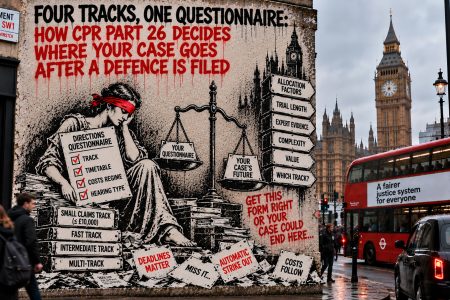
Once a defence is filed, CPR Part 26 begins the sorting exercise that decides where your case lives: small claims, fast, intermediate or multi-track. The directions questionnaire carries a fixed deadline the parties cannot extend, an automatic strike-out sanction for ignoring it, and answers that shape the timetable, the costs band and the hearing format. This guide explains the machinery – and how to complete the form so the answers work for you.
Written by John Barwell
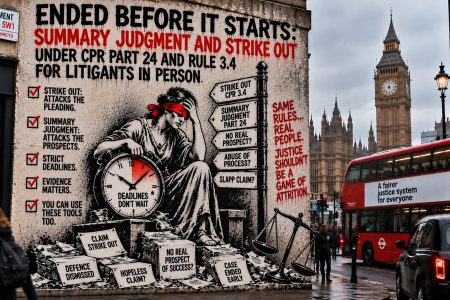
Two applications can end a civil case before it ever reaches trial. This guide explains the difference between strike out under CPR rule 3.4 — including the new SLAPP ground — and summary judgment under Part 24, the notice and evidence deadlines both sides must meet, and how a litigant in person can resist an application or use the same procedure against a hopeless claim or defence.
Written by John Barwell
Court fees are set to be felt — £455 to issue an £8,000 claim, £346 more for the hearing — but the Help with Fees scheme can reduce them to zero for anyone under the savings and income thresholds. The catch is that it is strictly self-service: a separate application for every fee, a 28-day clock on evidence letters, and three months to reclaim a fee you should never have paid.
Written by John Barwell
WordPress tags (comma separated):** tenancy deposit, deposit protection, section 214, Housing Act 2004, prescribed information, Part 8 claim, county court, litigants in person, assured periodic tenancy, Renters’ Rights Act 2025
Written by John Barwell
The ICO can investigate a data breach and fine the organisation – but it cannot award the victim a penny. Compensation only comes from a civil claim under Article 82 of the UK GDPR and section 168 of the Data Protection Act 2018, which expressly covers distress. This guide explains what a claimant must prove, what Lloyd v Google changed, realistic quantum for distress-only cases, and whether your breach is a court claim, an ICO complaint, or both.
Written by John Barwell
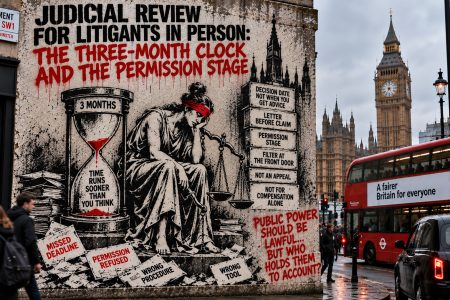
Judicial review is often the only route for challenging a public body’s decision — but every claim needs the court’s permission, and the three-month clock runs from the decision itself, not from when you first get advice. This guide explains what judicial review can reach, how the pre-action protocol works, what the permission filter screens for, and when another route is the better tool.
Written by John Barwell
A Part 36 offer is not an ordinary settlement letter — it is a formal costs instrument with a clock attached. Reject one and fail to beat it at trial, and the court must, unless it would be unjust, make you pay the other side’s costs from the day the offer period expired, even though you won. This guide explains the formalities, the 21-day relevant period, and how to evaluate, answer or match a Part 36 offer.
Written by John Barwell
Before you invest months in the final complaint stage, read the map: the MP filter for government complaints, the one-year time limits, the 25% first-step pass rate, and why the Ombudsman’s £426,212 year of financial recommendations tells you what “winning” actually looks like.
Written by John Barwell
Winning liability is only half the case. This guide explains how an employment tribunal actually builds an unfair dismissal award: the basic award’s statutory formula, the compensatory award’s assessment of real financial loss, the reductions for conduct, chance and mitigation, the statutory cap, and the up-to-25% Acas Code adjustment either way.
Written by John Barwell
The court will not collect your judgment for you. This guide walks through the four main enforcement routes for litigants in person — goods, wages, savings and property — with the current court fees and the thresholds that decide which route is realistic for your debtor.