
 Written by
 Civil justice and accountability
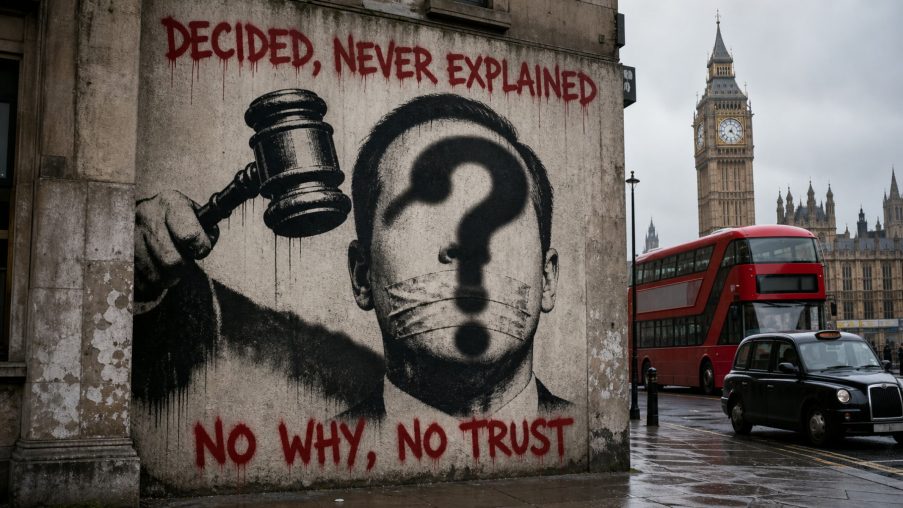
A decision is not transparent simply because it reaches an outcome. For the person affected, the real question is whether they can understand what was decided, what mattered, what was rejected and whether there is any proper route to challenge, clarify or accept the result.
Publication snapshot
Why reasons matter when decisions affect people
An outcome tells someone what has happened. Reasons explain why it has happened. When reasons are missing, unclear or formulaic, the person affected is often left trying to work out whether the decision turned on evidence, law, policy, discretion, credibility, procedure or misunderstanding.
An outcome closes a file. Reasons show the route from issue to evidence, from evidence to finding, and from finding to result.
There is no single universal rule that every decision must contain detailed written reasons. The duty depends on context, source and consequence.
Before escalating, the affected person should map the decision and identify exactly what is missing from the reasoning.
Decision-making
The decision that says everything except why
Many people receive decisions that look complete at first glance. The document has a heading. It has a date. It may refer to policies, procedures, rules or guidance. It may end with a clear outcome. A complaint is not upheld. A grievance is rejected. A claim is dismissed. A permission application is refused. A regulator declines to investigate. A review concludes that no further action will be taken.
But an outcome is not the same as an explanation.
A person can lose and still understand why they lost. They may disagree with the result. They may think it was harsh, disappointing or wrong. But if the decision identifies the issue, explains the evidence that mattered, records the essential findings and shows the route to the conclusion, the person at least knows what they are dealing with.
The deeper problem arises when the decision announces the result but leaves the person guessing. Was their evidence rejected, or simply not addressed? Was the wrong issue considered? Was an important point treated as irrelevant? Did the decision turn on credibility, procedure, discretion, policy, law or lack of evidence? Was the person’s case weak, or was it misunderstood?
That is where a decision becomes something less than accountable. It may close the file, but it does not necessarily resolve the dispute. It may tell the person what has happened, but not why it has happened.
Unexplained decisions rarely calm conflict. They often prolong it because they leave the affected person trying to argue against a conclusion whose reasoning they cannot see.
The person is told what has been decided. The file may be closed, the sanction imposed, the claim rejected or the complaint dismissed.
The person can see the issue considered, the material evidence, the findings made and the test or policy applied.
The person can decide whether to accept the decision, request clarification, complain, appeal, review, seek advice or take no further step.
Accountability
Reasons are not decoration
Reasons are not administrative decoration. They are the bridge between power and accountability.
A reasoned decision does more than state who won and who lost. It shows that the decision-maker understood the issue, confronted the material evidence, applied the relevant test and reached a conclusion that can be followed by the reader. That is what makes the decision intelligible.
For a litigant, reasons may help identify whether there is any real basis for challenge or whether the decision reflects a finding that cannot sensibly be disturbed. For an employee, reasons may show whether a grievance, disciplinary outcome or workplace decision addressed the actual complaint. For a complainant, reasons may show whether the organisation investigated the right question. For a whistleblower, reasons may help distinguish between a decision that engaged with the disclosure and one that avoided it. For a member of the public dealing with a regulator or public body, reasons may reveal whether the substance was addressed or whether the response was merely institutional closure.
Without reasons, the person affected is often left fighting shadows. They do not know whether the real issue is evidence, law, procedure, credibility, discretion, policy or misunderstanding.
That uncertainty has practical consequences. It can drive unnecessary appeals, unfocused complaints, repeated correspondence, subject access requests and escalating allegations. It can also cause people to abandon legitimate concerns because they cannot identify the route by which the decision can be tested.
The decision should show what question was actually being answered.
The reader should understand which material mattered and how it was treated.
The decision should show whether the right policy, rule, legal test or discretion was applied.
The affected person can decide whether challenge, clarification or acceptance is realistic.
A clear explanation does not guarantee acceptance. It does not require every reader to agree. It does not convert an adverse outcome into a welcome one. But it gives the affected person something concrete to understand, assess and, where appropriate, challenge.
Legal control
The law is contextual, not absolute
There is an important legal boundary. English law does not impose one universal rule that every decision must come with detailed written reasons. The duty to give reasons depends on source and context.
It may arise from statute, procedural rules, legitimate expectation, fairness, the nature of the function being exercised, the seriousness of what is at stake, or the need to make an appeal, review or complaint route effective. A court, tribunal, regulator, employer, ombudsman or public body may be operating under very different duties depending on the decision being made.
That is why broad slogans can mislead. “I was entitled to full reasons” may be right in one context and wrong in another. “The decision had no reasons, so it must be unlawful” is too simple. “The reasons were short, so the decision is defective” is also too simple.
The better question is not whether reasons are always required. The better question is whether this decision, in this context, needed an explanation sufficient to make it intelligible.
That is a narrower argument, but a stronger one. It avoids pretending that every adverse outcome carries the same legal duty. It also keeps the focus where it belongs: on whether the person affected can understand the essential route from issue to result.
The stronger question
“Every decision must give full reasons, and this decision did not.”
“In this context, the explanation was not sufficient to make the decision intelligible or the next route effective.”
This distinction matters because it keeps criticism anchored to the decision itself. The issue is not whether the decision-maker wrote the ideal decision. The issue is whether the affected person can see enough to understand what was decided, why it was decided and what, if anything, can properly be done next.
Intelligibility
Brevity is not the enemy; opacity is
A decision does not have to be long to be fair. Some decisions can be explained briefly because the issue is narrow, the evidence is straightforward, the procedural position is obvious, or the reason follows naturally from what happened at the hearing, in the correspondence or under the relevant policy.
A short reason can be lawful, fair and clear. A long explanation can still avoid the real issue.
The question is not literary quality. It is not whether the decision could have been better written. It is not whether every submission has been answered line by line. The question is whether the reader can understand the essential path from issue to outcome.
That distinction matters for both sides. Decision-makers should not be expected to write essays in every case. Courts and tribunals manage heavy lists. Public bodies and complaint handlers deal with high volumes of decisions. Employers and regulators often need to make practical determinations under time and resource constraints.
The law does not usually require perfection or exhaustive narrative. But brevity should not become a shield for opacity.
If the central issue is not identified, if material evidence is rejected without explanation, if the decision states a conclusion without showing the route to it, or if the reader is left unsure whether the correct test was applied, the problem is not style. It is intelligibility.
A concise reason can be enough
The issue is not length. It is whether the reason allows the reader to understand the route from the question being decided to the evidence, finding and outcome. A reason can be concise. It cannot be meaningless.
Consequence
When reasons matter more
Reasons become more important when the consequences become more serious. If a decision affects liberty, livelihood, professional status, access to a hearing, an appeal route, a sanction, a costs burden or a matter of serious public consequence, the need for intelligibility becomes harder to dismiss.
That does not mean seriousness alone always creates a legal duty to give detailed reasons. The law remains contextual. But seriousness changes the practical and fairness landscape.
A decision that ends a claim is different from a routine direction. A decision that prevents a person from continuing to a hearing is different from an administrative timetable. A decision that affects someone’s professional ability to work is different from a minor procedural note. A decision that departs from important policy, professional advice or established practice may call for a clearer explanation than a decision whose basis is obvious from the surrounding material.
The point is not that every consequential decision must be written at length. The point is that the more a decision closes a door, the more important it becomes that the person affected can see why that door has been closed.
Where a decision affects appeal, review, complaint, reconsideration or hearing access, unclear reasons can make the next step ineffective.
Where livelihood, reputation, sanction or workplace status is affected, the person needs to understand the factual and procedural basis.
Where a decision affects public trust in a regulator, body or process, intelligibility becomes part of accountability.
Reasons matter most where the decision affects the next step. If the person needs to decide what, if anything, can properly be done next, an unexplained decision leaves them making that choice in the dark.
Responsible criticism
The difference between unclear reasons and bad faith
There is another distinction that must be kept clear. Poor reasons are not proof of corruption. They are not, by themselves, proof of bias, dishonesty, bad faith, concealment or misconduct.
An inadequate explanation may show a legal problem, a fairness problem, an accountability problem or a public-confidence problem. It does not automatically prove an improper motive.
That distinction is not a technicality. It is central to responsible criticism.
A decision-maker may give poor reasons because the issue was misunderstood. The reasons may be compressed because of workload. The explanation may be badly structured. The writer may have assumed that the basis was obvious when it was not. The decision may still be wrong, unfair or vulnerable. But that is not the same as saying the decision-maker acted dishonestly.
There will be cases where stronger allegations arise from wider evidence. But poor reasons alone should not be made to carry that weight.
The safer and stronger criticism
The explanation given is not good enough to sustain confidence in the decision. It does not show what happened to the central issue. It does not explain how the evidence was treated. It does not identify why one account was accepted and another rejected. It does not show whether the right test was applied. It leaves the person affected unable to understand whether the decision was lawful, fair or rational.
That criticism is serious without being reckless. It focuses on the decision, the process and the explanation, rather than leaping to allegations that may not be supported by evidence.
Escalation
Why unclear reasons escalate disputes
Unclear reasons often make disputes worse. A person who receives an unexplained adverse decision may respond emotionally, but the deeper problem is usually structural.
They cannot tell what they need to answer. They cannot identify the missing evidence. They cannot separate an arguable error from disappointment. They cannot see whether the decision turns on a legal threshold, a factual finding, a credibility assessment, a procedural default or a discretionary judgment.
The result is predictable. Correspondence becomes longer. Complaints become broader. Allegations become stronger. The person starts challenging everything because the decision has not identified what actually mattered.
This is especially difficult for litigants in person and others navigating systems without professional help. Self-represented parties are not exempt from rules. They are not entitled to a different substantive legal test. But they are often trying to decode decisions without the training, distance or terminology that represented parties may have.
An unclear decision can therefore create a practical access problem. The person affected may not know whether they need evidence, legal advice, procedural correction, clarification, a complaint route, an appeal route or a realistic assessment that the decision is unlikely to be disturbed.
The affected person knows the result but cannot see the reasoning path.
Because the decisive issue is unclear, the person may challenge every possible point.
Appeals, complaints, correspondence or requests for information become broader than they need to be.
That is not an argument for special pleading. It is an argument for intelligibility. When decisions are intelligible, people can focus. When they are not, people often escalate.
Legal Lens point
Discipline before escalation
The practical Legal Lens point is this: the first discipline is not to accuse. It is to map the decision.
What was decided? What issue was supposedly determined? What evidence was mentioned? What evidence appears to be missing? What findings were made? What test seems to have been applied? What conclusion followed? What route, if any, appears to exist under the relevant rules, policy or procedure?
That exercise matters because unclear reasons require disciplined analysis, not rhetorical escalation. If the real problem is that the decision-maker failed to address the central issue, say that. If the problem is that evidence was rejected without explanation, identify the evidence and the missing reasoning. If the problem is that the wrong test appears to have been applied, explain why. If the problem is that the decision is disappointing but intelligible, that too has to be recognised.
Accountability begins with a simple question: can the reader see how the decision-maker moved from the issue to the evidence, from the evidence to the finding, and from the finding to the result?
If the answer is yes, the dispute may still continue, but at least it has a shape. If the answer is no, the decision has left an accountability gap.
It may be legally defensible in some contexts and vulnerable in others. It may require clarification, review or no further step at all. That depends on the forum, the rules, the consequences and the facts.
As a public-interest principle, the point is clear. Decisions that affect people should not leave them guessing why power was exercised in that way. Reasons are how institutions show their work. Without them, the outcome may be known, but accountability remains unfinished.
Source anchors
Source anchors for the accountability framework
These anchors support the article’s general framework on intelligibility, good administration and public accountability. They do not determine whether reasons were legally required, adequate or defective in any individual case.
PHSO principles
Being open and accountable Public bodies should account openly for decisions and actions, state decision-making criteria and give reasons for decisions.PHSO principles
Getting it right Good administration includes acting within powers, following policies, considering relevant matters and balancing evidence appropriately.PHSO principles
Acting fairly and proportionately Public bodies should act fairly, impartially, consistently and proportionately when making decisions that affect people.GOV.UK standards
The Seven Principles of Public Life Objectivity, accountability and openness provide the wider public-life context for transparent decision-making.Decision-route assessment
Get a free written assessment of the decision route
If a decision has affected a claim, complaint, workplace process, regulatory route or public-body response, Legal Lens can help structure a preliminary written map of what was decided, what reasons were given and what practical route may exist next.
Identify the outcome, the issue supposedly decided, the evidence mentioned, the findings made and the route from finding to result.
Separate disagreement with the outcome from a genuine intelligibility problem, missing evidence issue or procedural route concern.
Consider whether the next step is clarification, complaint, review, appeal, subject access, evidence gathering or no further action.
Independent Legal Lens consultancy. Legal Lens is not a regulated solicitors’ firm. A preliminary assessment is not a substitute for regulated legal advice where that is needed.