
 Written by
 The father of a 10-year-old boy who died more than three decades ago has renewed calls for a fresh inquest and/or a public/independent Government inquiry after receiving an official apology acknowledging institutional failings in the handling of his son’s case.
Robbie Powell died in April 1990 from Addison’s disease—a treatable condition that invariably results in death without treatment. The condition had been suspected by a hospital consultant four months before his death but was never treated. The ACTH test that would have diagnosed the condition was requested but not carried out, and the parents were not informed of the suspicion or need for the test. In the fortnight before he died, the schoolboy was seen by five different GPs on seven separate occasions. Unknown to the parents at the time, the GPs had been put on notice of the suspicion of Addison’s disease, the need for the test, and had been requested to refer the child back to hospital if he became unwell.
An inquest held in 2004—some 14 years after Robbie’s death—returned a verdict that he “died from natural causes and neglect contributed to the cause of death.”
But Robbie’s father has long maintained that the full circumstances of his son’s death have never been properly examined, and that multiple institutions failed both his son and his family in the decades that followed.
‘Sufficient evidence’ but no prosecution
A report prepared for ministers reveals that in 2003, prosecutors concluded there was “sufficient evidence” to bring charges of forgery and perverting the course of justice against two GPs connected to Robbie’s medical care and their senior secretary.
However, no prosecutions were ever brought. The decision not to proceed was based on the passage of time and an earlier letter from police stating that “no further action” would be taken—a letter the family says was subsequently treated as granting immunity from prosecution.
A major police investigation conducted between 2000 and 2002 had identified 35 potential criminal charges, including gross negligence manslaughter, forgery, attempting to pervert the course of justice, and conspiracy to pervert justice. The senior investigating officer was later excluded from the inquest process, and transcripts of interviews conducted under caution were not disclosed to the family for the inquest.
Ombudsman criticism
Seven years after the 1992 Welsh Office appeal was withdrawn by the Powells as a consequence of administrative irregularities, the Parliamentary Ombudsman eventually found maladministration in the handling of the appeal by the Welsh Office in relation to the NHS complaint procedures.
Robbie’s original GP medical records went missing during an adjournment, and officials denied receiving them for three years before finally admitting they had been their responsibility all along and should have been safely secured. The original GP records were later found to contain additional clinical documents regarding Robbie’s GP care that had never been disclosed previously.
The Ombudsman concluded that the family’s decision to withdraw their appeal “might well have been refused or rescinded” had it not been for official failings.
Medical regulator apologises
The GMC also apologised to ministers in 2012 after it emerged that a new five-year time limit for complaints had been introduced without notifying the family—despite earlier written assurances that “there is no time limit in principle” for submitting complaints.
The regulator had previously declined an offer of free assistance from the retired senior investigating officer who had led the major police inquiry.
Fresh apology in 2024
Last autumn, an independent assessor found that the family had been “misled” about the scope of an internal review into how their case was handled. The assessor described a nine-year delay in completing the review as “extraordinary.”
Following that finding and others, the Director of Public Prosecutions wrote to the family offering a “heartfelt apology” and accepting responsibility for the way the matter was handled.
“You should have heard the outcome of the Review from a DPP. I offer my deepest and sincere apologies for the way the Review was handled and the time it took to complete it.”
However, the letter confirmed that “no prosecutions can be brought” and that “there is no further remedy to be offered for the failures of the CPS between 1994 and 2000 and the fact that the CPS had not adequately investigated Mr Powell’s serious complaints in 2003.”
Calls for public inquiry
The family is now seeking a fresh inquest under laws that allow the High Court to order a new hearing where there has been material irregularity or significant new evidence.
Legal experts supporting the family argue that the original inquest failed to meet the standards required under human rights law—including requirements for independence, effectiveness, and proper family participation.
They point to concerns about the sequential roles held by one official who served in the police investigation, as family liaison, and later as coroner’s officer—raising questions about the appearance of independence.
If the inquest is refused, the family is also calling for a full public inquiry examining failures across multiple agencies, and for the preservation and disclosure of key documents they say may never have been shared with them.
‘Justice delayed’
Speaking about the case, a legal consultant working with the family said the 2024 apology represented an important acknowledgment of institutional failure—but that it could not substitute for a proper investigation into how a 10-year-old boy came to die despite his condition being known to medical professionals.
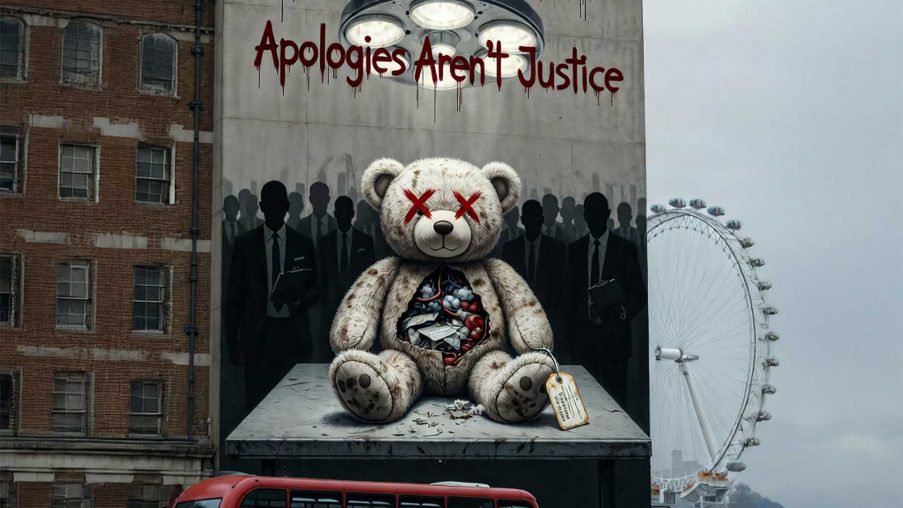
“An apology without remedy is not accountability. The question now is whether the state will finally discharge its obligation to investigate this death properly—or whether a family will be left, after 35 years, with nothing but expressions of regret.”
Ministers are understood to be considering the family’s representations. The case raises broader questions about the adequacy of safeguards for families seeking answers when a child dies in circumstances involving potential medical failings and post-death cover-ups.
If you have been affected by issues raised in this article, support is available from bereavement charities including Cruse Bereavement Support.
Legal disclaimer:
This article is based on information, documents and accounts provided to the author at the time of writing. It is published in the public interest to promote transparency, scrutiny and informed debate. It does not purport to be a complete statement of all the facts or evidence in this case. Nothing in this article constitutes legal advice, and readers should not rely on it as a substitute for obtaining advice from a qualified solicitor or barrister about their own circumstances. All individuals and institutions mentioned are entitled to put forward their own account, and any reader with relevant information is encouraged to seek independent legal advice before taking action.