
 Written by
 Civil procedure · Default judgment · Set aside
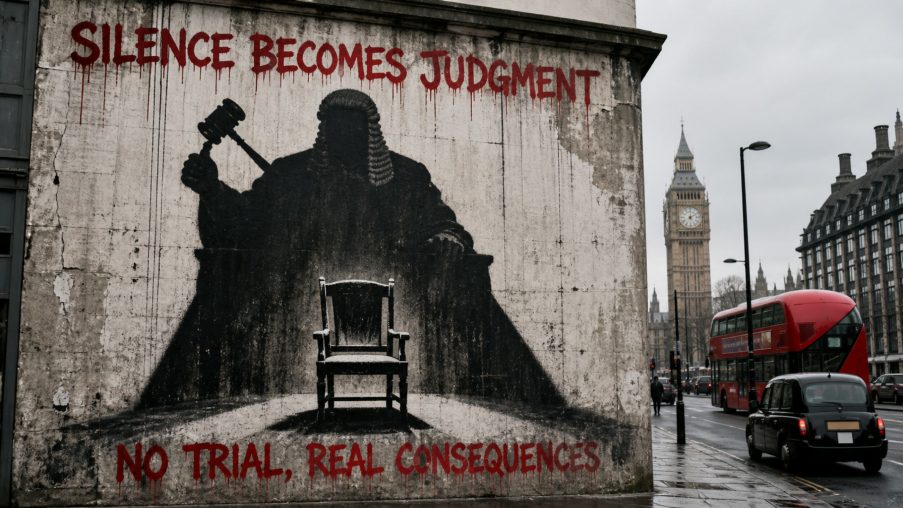
A court judgment does not always follow a trial. Sometimes it follows silence. Default judgment is the procedural moment where a missed response can become judgment before the facts are tested, and the defendant’s first task may no longer be to defend the claim, but to explain why judgment should be reopened.
Publication snapshot
- Default judgment is judgment without trial where the rules permit judgment after a missed acknowledgment of service or defence.
- The response clock normally turns on service, so service problems and default judgment problems often overlap.
- If judgment was wrongly entered, the court must set it aside under CPR Part 13.
- If judgment was regularly entered, the defendant is usually asking the court to exercise discretion, which requires evidence, promptness and a proper route.
- A real defence is not a protest. It needs substance, documents and a clear explanation of the answer to the claim.
The core point: silence can become judgment
A defendant receives a claim form. They may intend to respond. They may think there is still time. They may be confused by the paperwork, the online system, the legal language, or the difference between complaining and filing a defence.
They may be waiting for documents, negotiating, seeking advice, dealing with illness, or assuming the claim is so obviously wrong that the court will see the problem later.
Civil procedure may ask a colder question: was the required response filed in time?
If the answer is no, the claimant may be able to obtain judgment before the court has tested the facts. That is the hidden control point. The merits may still matter later, but they may no longer be the first question. The first question may be why the defendant did not respond in time.
The clock may start
Once a claim is validly served, response periods can begin even if the defendant is confused or seeking advice.
Silence has consequences
Failure to file the required procedural response may let the claimant seek judgment without trial.
Judgment changes the posture
The defendant may now need to reopen judgment rather than simply defend the claim.
Evidence becomes critical
Set aside usually turns on service, timing, defence, promptness and the documents explaining what happened.
Default judgment is not a trial judgment
Default judgment can feel like a decision on the facts. For the defendant, it may feel as if the court has accepted everything the claimant says. For the claimant, it may feel as if the case has been won because the defendant did not engage.
Both reactions are understandable. Both need care.
Default judgment is a rule-governed procedural judgment. It can arise where a defendant has failed to file an acknowledgment of service, a defence, or a document intended to be a defence, and the conditions for default judgment are satisfied. It is not available in every type of claim. It is not automatic in every case of silence. The procedural gateway still matters.
The practical distinction
Default judgment does not necessarily mean the court has heard the evidence and decided the claimant was right. It means the rules permitted judgment because the defendant did not take the required procedural step, or was treated as not having done so.
The response clock: informal protest is not enough
The response clock normally starts with service. That is why service and default judgment are closely linked. If the claim form was not validly served, the defendant may not truly be in default. If the claim form was validly served, the defendant usually has a short period to take a formal step.
This is where people get caught. They may read the claim form and write to the claimant. They may send an email saying the claim is wrong. They may ask for missing documents. They may try to settle. They may complain to the claimant’s solicitor. They may think that because they are disputing the claim, the court will know they are defending it.
The court may not know that. Civil procedure usually requires a formal response: an acknowledgment of service, a defence, an admission, or another permitted procedural step. Informal protest is not necessarily enough. Negotiation is not necessarily enough. Asking for documents is not necessarily enough.
Claim served
Service is the procedural event that normally starts the response analysis.
Formal response due
The defendant must identify the correct procedural response and deadline.
Informal action may not count
Emails, negotiations and complaints may not amount to a filed acknowledgment or defence.
Default route may open
If the required response is missing and the rule conditions are met, judgment may be requested.
The gateway questions before judgment
“The defendant did not reply” is not the whole answer. The claimant still needs a valid procedural route.
Before default judgment is sought or challenged, the gateway questions should be checked. Was the claim form properly served? Had the time for acknowledging service or filing a defence expired? Had a response already been filed? Was there an outstanding application that prevented default judgment? Had the whole claim been satisfied? Was this a claim in which default judgment could be obtained? Was any required certificate of service in place?
Those questions matter because default judgment is powerful. It avoids a trial. It can create a judgment debt. It can lead to enforcement. It can affect credit, costs, bargaining power and practical control of the dispute. A mechanism that powerful has to be rule-based.
Default judgment gateway checklist
- Was the claim form and particulars of claim properly served?
- Has the relevant acknowledgment or defence period expired?
- Has the defendant filed an acknowledgment, defence, admission or application?
- Is default judgment available for this type of claim?
- Has the whole claim already been satisfied?
- Has any required certificate of service been filed?
When judgment was wrongly entered
The first set-aside question is whether default judgment should have been entered at all.
If the conditions for default judgment were not satisfied, the judgment may have been wrongly entered. In that situation, the court’s role is not primarily about sympathy or discretion. It is about whether the claimant was entitled to judgment under the rules.
Common problems include invalid service, a premature request for judgment, the time for acknowledging service or filing a defence not yet having expired, a response already having been filed, the whole claim having been satisfied before judgment, or another procedural bar that meant default judgment was not available.
This is the mandatory route. If judgment was wrongly entered because the relevant CPR Part 12 conditions were not satisfied, or because the whole claim had already been satisfied before judgment, the court must set it aside.
Was judgment wrongly entered?
Focus on service, timing, response filed, claim satisfied, and whether the claimant was entitled to default judgment under CPR Part 12.
Prove the procedural defect
Use the claim form, certificate of service, court record, response confirmation, admission, payment evidence or correspondence showing why judgment should not have been entered.
When judgment was regular
If default judgment was regularly entered, the position is different. The court may still set it aside, but the defendant is usually in discretionary territory.
The usual route is to show either a real prospect of successfully defending the claim, or some other good reason why the judgment should be set aside or varied, or why the defendant should be allowed to defend. The court must also consider promptness.
That is a harder position than filing the response in time. Once judgment has been entered, the defendant is no longer simply defending the claim. They are asking the court to reopen a judgment. The question becomes structured: what is the defence, what went wrong, what happened next, and why should the judgment not stand?
Is there a real prospect?
The proposed defence must have substance. Bare disagreement is usually weak.
Is there another proper reason?
Procedural unfairness, non-receipt, missing documents or other circumstances may matter if evidenced.
Was action taken quickly?
The court must consider whether the application was made promptly.
A real defence is not a protest
A real prospect of defending the claim is not the same as saying “I disagree”.
It is not enough to say the claimant is wrong. It is not enough to say the bill is unfair. It is not enough to say there is another side to the story. It is not enough to say the defendant wants their day in court. Those may be starting points, but they are not usually enough.
A real defence needs substance. What is the defence? Which facts are disputed? Which documents support the defendant? What part of the claim is admitted, denied, or not admitted? What is the legal or contractual answer to the claim? Is there a payment point, limitation point, identity issue, set-off, counterclaim, defective-goods point, performance issue, misrepresentation argument, or some other proper answer?
The court will not usually conduct a full trial at the set-aside stage. But it does not have to accept bare assertions. Evidence turns confusion into an argument.
What a draft defence should show
- Which parts of the claim are admitted, denied or not admitted.
- The key facts relied on and the documents supporting them.
- Any payment, limitation, identity, set-off, contractual or statutory answer.
- Any counterclaim or linked issue that affects the claim.
- A concise explanation of why the defence has a real prospect of success.
Promptness: what did you do next?
Promptness is central.
A defendant applying to set aside a regular default judgment should expect the court to ask why they acted when they did. Promptness does not always mean a fixed number of days. It depends on context. But the practical question is simple: once the defendant knew, or could with reasonable diligence have known, enough to act, did they move quickly?
That question can be decisive. A defendant may have a real defence and still be harmed by delay. A defendant may have an explanation for missing the original response but no good explanation for waiting after judgment. A defendant may say they were seeking advice, but the court may ask why an urgent protective application was not made.
The safest practical message is blunt: act as soon as you know.
The promptness warning
Do not wait for enforcement, a bailiff letter, a credit problem, failed negotiation or the claimant’s refusal to consent. Delay can make a genuine problem look tactical and a serious defence look like an afterthought.
The evidence trail: turn the problem into an application
Default judgment applications often turn on chronology. Days can matter. Silence can matter. Delay can matter.
For defendants, the evidence trail should show when the claim was first received, when the judgment was first discovered, what was done immediately afterwards, why the original deadline was missed, and what defence or other reason supports reopening judgment.
Non-receipt is not a magic phrase. Illness, vulnerability, low literacy, digital exclusion, online filing problems and missing response documents can all matter, but they usually need specific evidence. A diagnosis alone may not answer the procedural question. A general statement that the portal did not work may not be enough. A stronger case is specific, dated and documented.
Set-aside source pack
- Claim form, particulars of claim, response pack and any envelope or email trail.
- Certificate of service, deemed-service information, address evidence and court notices.
- Default judgment, enforcement letters and the date judgment was first discovered.
- Portal screenshots, submission receipts, error messages, helpdesk references or court emails.
- Medical, vulnerability, language, accessibility or absence evidence if relied on.
- Chronology explaining what happened and what was done next.
- Draft defence or clear explanation of the proposed defence.
- Evidence of prompt action after learning of the claim or judgment.
The claimant’s responsibility
Default judgment is not only a defendant’s risk. It is also a claimant’s responsibility.
A claimant seeking judgment without trial should check the route carefully. Was the claim form properly served? Was the response time calculated correctly? Was an acknowledgment, defence, admission or other response filed? Was any relevant application outstanding? Was the whole claim satisfied? Was any required certificate of service filed? Is default judgment available for this type of claim?
A claimant is entitled to use the default judgment route where the conditions are met. But it is risky to treat default judgment as a shortcut around defective service, missing documents, misleading timing or known procedural problems.
Judgment without trial is a serious step. The request for it should be clean.
For defendants
Do not rely on informal protest. File the required response in time. If judgment is entered, act immediately, evidence the problem and show the defence.
For claimants
Check service, timing, response status, claim type and certificate requirements before requesting judgment without trial.
Source anchors
These anchors support the procedural framework. They do not decide any individual claim, default judgment, service dispute, set-aside application, enforcement issue, limitation question or online filing problem.
- CPR Part 12: Default judgment — meaning of default judgment, claims where default judgment may not be obtained, conditions, procedure and restrictions.
- CPR Part 13: Setting aside or varying default judgment — mandatory set aside, discretionary set aside, real prospect of defending, some other good reason, promptness and evidence.
- CPR Part 10: Acknowledgment of service — acknowledgment of service, response periods and consequences of not filing.
- CPR Part 15: Defence and reply — filing a defence, defence periods and the consequence of not filing a defence.
- CPR Part 6: Service of documents — service, deemed service, alternative service, dispensing with service and certificates of service.
- CPR Part 7: How to start proceedings — claim form issue, particulars of claim, service period and extension of time for service.
- CPR Part 1: Overriding objective — just and proportionate handling, fairness, participation, resource allocation and compliance with rules.
Closing point
Default judgment is not just an administrative step. It is a judgment.
It can affect enforcement, costs, settlement leverage, credit, reputation and practical control of the dispute. For claimants, it can be a legitimate consequence of non-response. For defendants, it can be a procedural shock. For the court, it is a rule-governed mechanism.
The merits matter. But procedure decides when the merits are heard.
The Legal Lens point is simple. Do not treat a claim form as ordinary paperwork. Do not assume negotiation pauses the deadline. Do not rely on informal protest. Do not wait to see what happens. If a claim form arrives, respond properly and in time. If default judgment arrives, act immediately, evidence the problem and show the defence.
Default judgment, set aside and evidence structure
Get a free written assessment before a missed response hardens into enforcement
Legal Lens can help turn a default judgment problem into a structured procedural map. The assessment separates service, response deadline, judgment regularity, set-aside route, promptness, draft defence, evidence gaps and practical next steps.
Check service, timing, response status, satisfaction of the claim and Part 12 gateway issues.
Identify the facts, documents and legal answer that make the proposed defence more than a protest.
Map when the claim or judgment was discovered, what happened next and what evidence supports the chronology.
Independent Legal Lens consultancy. Legal Lens is not a regulated solicitors’ firm, court office, claims-management company or emergency advice service. A preliminary assessment is not a substitute for regulated legal advice, urgent court advice, formal representation, filing an application or responding to enforcement where a deadline is imminent.