
 Written by
 Legal Lens security · hardware authentication · evidence protection
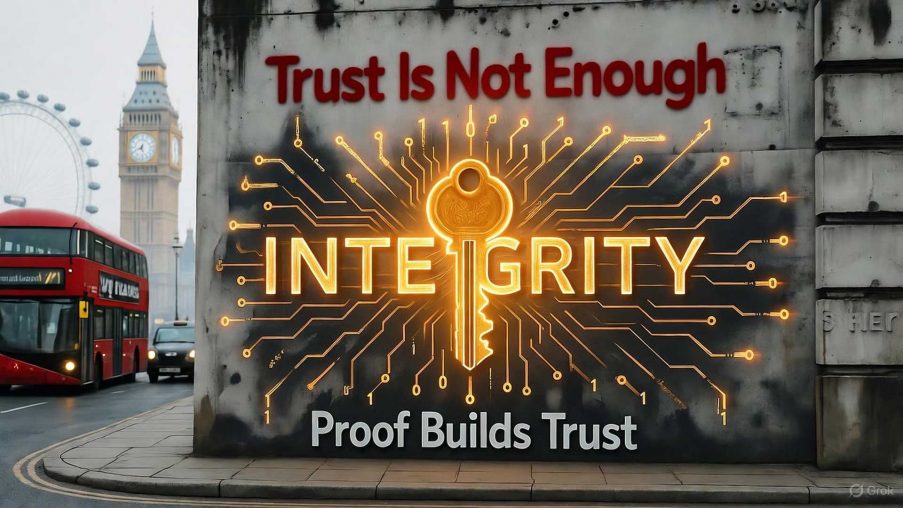
In an era defined by data breaches, surveillance and selective accountability, trust alone is no longer enough. At Legal Lens, integrity is not just promised. It is being engineered into the way communications, evidence files and internal systems are protected.
Publication snapshot
- Legal Lens has moved to hardware-based authentication for communications, evidence files and internal systems.
- The approach uses YubiKey FIDO2 / PIV authentication to reduce reliance on passwords, SMS codes and reset-based access.
- The purpose is to protect sensitive material handled by whistleblowers, litigants in person and reform advocates.
- The article frames security as an operational accountability measure, not a cosmetic technical upgrade.
The change
From this month, all Legal Lens communications, evidence files and internal systems are protected by hardware-based authentication using YubiKey FIDO2 / PIV.
This is a high-assurance security model designed to reduce dependence on password-only access, software reset flows and account recovery systems that can become weak points in sensitive work.
Why we made the change
Our work frequently involves whistleblowers, litigants in person and reform advocates handling highly sensitive material. These are individuals who may already face institutional resistance and personal risk. They deserve more than the industry’s usual assurance that “data is protected”.
Traditional multi-factor authentication — passwords, SMS codes or authenticator apps — still relies on software, recovery channels or reset processes that can be intercepted, misused or compromised.
A hardware key operates differently. It uses cryptographic verification that activates only on legitimate domains. Even if a password were stolen or a network compromised, access is blocked without the physical key.
What this reduces
- Password theft risk.
- Phishing risk.
- SMS interception risk.
- Weak account-recovery risk.
What this supports
- Stronger authentication.
- Evidence-file integrity.
- More disciplined access control.
- Clearer accountability for system access.
Integrity by architecture
Legal Lens exists to expose systemic misconduct, bias and procedural failure across the justice system. To do that credibly, we must show that our own processes are designed to resist tampering.
Hardware authentication gives that assurance at the access-control layer. Access events can be authenticated through cryptographic proof. There are fewer passwords to leak, fewer reset routes to exploit, and less reliance on informal trust.
This is not a cosmetic measure. It is a statement of operational ethics: if we ask public bodies and regulators to prove integrity, we must first prove it ourselves.
How this compares to common legal-sector practice
Many legal and professional services environments still depend on centrally managed passwords and cloud authentication platforms. These systems are convenient, but they rely on administrators, vendors and recovery processes that may not be transparent to the client or source.
Legal Lens’s approach is different.
Authentication
Legal Lens: hardware key rather than password-only access.
Access control
Legal Lens: physical possession required as part of the access process, reducing remote compromise risk.
Data custody
Legal Lens: locally secured or encrypted workflows are prioritised over unnecessary vendor-controlled exposure.
Audit trail
Legal Lens: access is designed to be verifiable through cryptographic authentication rather than dependent only on third-party confidence.
This aligns with the UK GDPR Article 32 requirement for “appropriate technical and organisational measures”, while going further by reducing the weakest link in many digital-security systems: human-managed credentials.
Security as public accountability
When whistleblowers, claimants or campaigners contact us, they need to know that their evidence is protected against interception, duplication and tampering as far as reasonably practicable.
Publicly disclosing the security framework provides confidence and raises a broader challenge for the legal sector: the gap between ethical language and operational reality.
Too often, institutions promise confidentiality while outsourcing it to systems they do not fully control. Hardware-secured authentication reverses that equation. It restores practical control to the practitioner and, by extension, strengthens the position of the people whose material is being handled.
The broader message
Security and transparency are two sides of the same coin. You cannot have one without the other.
By moving to a hardware-secured environment, Legal Lens demonstrates that integrity is not a slogan. It is an infrastructure choice.
What we believe
Reform begins with how we handle the truth.
What this means
Hardware security is not only a technical upgrade. It is an ethical and operational one.
About Legal Lens
Legal Lens is an independent advocacy and investigative platform committed to transparency, accountability and justice reform. We provide analysis, evidence support and policy insight for whistleblowers and litigants in person.
Legal Lens communications are protected by YubiKey hardware authentication using FIDO2 / PIV to strengthen authenticity, confidentiality and operational independence.
Legal and technical disclaimer
This article is for general information and public accountability purposes only. It does not constitute legal, cybersecurity or data-protection advice. Hardware authentication materially strengthens access control but does not remove the need for wider security measures, including device security, encryption, backups, access governance, incident response, staff discipline and lawful data handling.
References to UK GDPR Article 32 or technical standards are provided for context and should not be treated as a formal compliance assessment. Organisations and individuals handling sensitive material should obtain specialist cybersecurity and legal advice where required.