
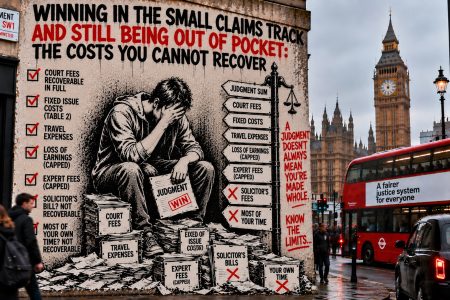
Many litigants in person assume that winning means being made whole – then meet CPR rule 27.14’s closed list. This guide explains exactly what is and is not recoverable on the small claims track: court fees in full, fixed commencement costs of £50 to £100, expert fees capped at £750, loss of earnings capped at £95 a day, and why legal representation costs stay with you even when you win. Includes a worked recoverable-costs schedule for a typical claim and the conduct and re-allocation exceptions where the limits lift.
Paul Millinder, long dismissed as a vexatious litigant, argues he has been unjustly silenced by the UK courts for exposing judicial misconduct and now seeks justice in Hong Kong.
The Crown Court backlog highlights systemic failures, with costly Nightingale courts offering little more than a temporary patch.
The NHS’s rising legal defence costs reveal systemic issues prioritising reputation over patient safety and transparency.
A solicitor faces serious allegations of misconduct in a long-standing will dispute. Discover the complexities of this intriguing legal case involving deception and family conflict.
Resource hub · Factsheet Legal Costs and Who Pays Them Understanding costs in small claims and fast-track cases Civil claims · Factsheet 7 of 17 Small Claims (up to £10,000) Each side usually pays their own legal costs Loser may pay winner’s expenses (e.g., court fees) Court can order costs if a party behaved unreasonably … Continue reading “7. Legal costs and who pays them”
Facing a narcissistic opponent or barrister? Learn strategies for Litigants in Person to navigate these challenges and maintain your mental health in UK courts.
The ICO’s high threshold for action creates hurdles for data protection claims in the UK. Explore the challenges and implications for individuals seeking justice.
Gilham v Ministry of Justice reshapes UK whistleblower protection, expanding PIDA’s scope and highlighting the importance of public awareness and judicial accountability.
Exploring how the Civil Procedure Rules create barriers for Litigants in Person and proposing solutions for equal access to justice in the UK legal system.
