Unfair treatment of whistleblowers in UK Employment Tribunals, highlighting challenges for Litigants in Person and calling for legal reforms.
 Written by John Barwell

Independent, practical help for litigants in person in England & Wales.
127 results
Written by John Barwell
Unfair treatment of whistleblowers in UK Employment Tribunals, highlighting challenges for Litigants in Person and calling for legal reforms.
 Written by John Barwell
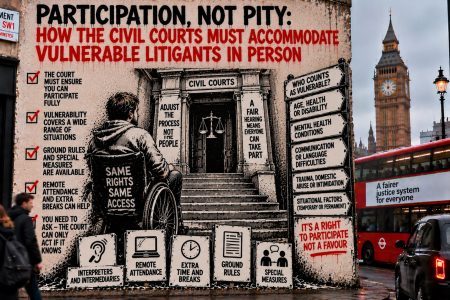
Since April 2021 the civil courts’ overriding objective has included making sure parties can participate fully and give their best evidence — and Practice Direction 1A gives judges a toolkit of directions to make that real. Many litigants in person have never heard of it. This guide sets out the menu of participation directions, who counts as vulnerable, and the wording of a short application you can file.
Written by John Barwell
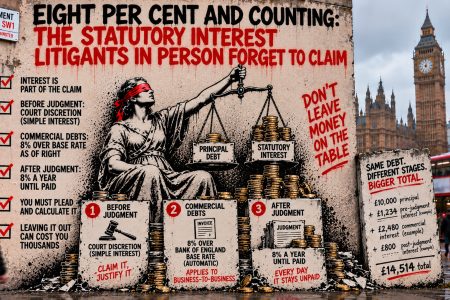
WordPress tags:** statutory interest, judgment debt interest, section 35A Senior Courts Act 1981, section 69 County Courts Act 1984, Late Payment of Commercial Debts (Interest) Act 1998, Judgments Act 1838 section 17, CPR 16.4, litigants in person, money claims, debt claims
Written by John Barwell
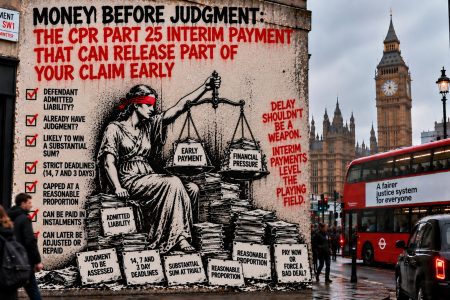
A defendant can admit liability and still keep you waiting months while quantum is assessed. CPR Part 25 Section V lets the court order part of the likely award to be paid early. This guide explains the gateways in rule 25.23, the fixed 14, 7 and 3-day service deadlines, what the evidence must show, the reasonable-proportion cap, how payments are adjusted or repaid, and why the trial judge is never told.
Written by John Barwell
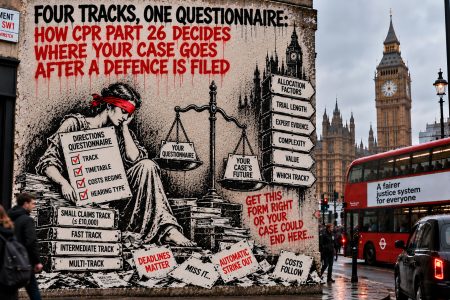
Once a defence is filed, CPR Part 26 begins the sorting exercise that decides where your case lives: small claims, fast, intermediate or multi-track. The directions questionnaire carries a fixed deadline the parties cannot extend, an automatic strike-out sanction for ignoring it, and answers that shape the timetable, the costs band and the hearing format. This guide explains the machinery – and how to complete the form so the answers work for you.
Written by John Barwell
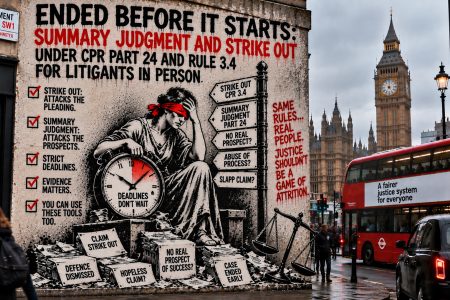
Two applications can end a civil case before it ever reaches trial. This guide explains the difference between strike out under CPR rule 3.4 — including the new SLAPP ground — and summary judgment under Part 24, the notice and evidence deadlines both sides must meet, and how a litigant in person can resist an application or use the same procedure against a hopeless claim or defence.
Written by John Barwell
The ICO can investigate a data breach and fine the organisation – but it cannot award the victim a penny. Compensation only comes from a civil claim under Article 82 of the UK GDPR and section 168 of the Data Protection Act 2018, which expressly covers distress. This guide explains what a claimant must prove, what Lloyd v Google changed, realistic quantum for distress-only cases, and whether your breach is a court claim, an ICO complaint, or both.
Written by John Barwell
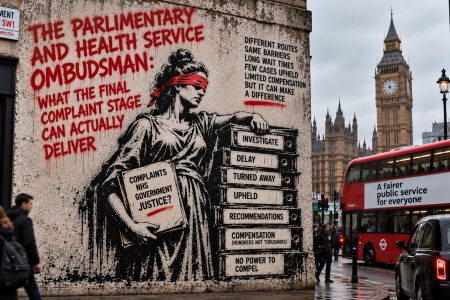
Before you invest months in the final complaint stage, read the map: the MP filter for government complaints, the one-year time limits, the 25% first-step pass rate, and why the Ombudsman’s £426,212 year of financial recommendations tells you what “winning” actually looks like.
Written by John Barwell
The court will not collect your judgment for you. This guide walks through the four main enforcement routes for litigants in person — goods, wages, savings and property — with the current court fees and the thresholds that decide which route is realistic for your debtor.
Written by John Barwell
You can bring a helper to a civil hearing, and the court needs good reason to stop you. But a McKenzie friend advises you; they do not speak for you. This guide maps the line between support and representation — the 2010 Practice Guidance, the reserved legal activities a helper must not touch, the separate grant needed for speaking rights, what paid McKenzie friends may lawfully charge for, and the conduct that gets lay helpers excluded.