
Pay into court or stop your claim: when a defendant can demand security for costs, and the threats litigants in person can ignore

A demand to pay into court or drop your claim is not a court order. Security for costs under CPR Part 25 Section VI has a two-stage test and a closed list of conditions — and an individual claimant’s poverty, on its own, is not one of them. How the regime works, what a real application looks like, and how to respond with evidence.

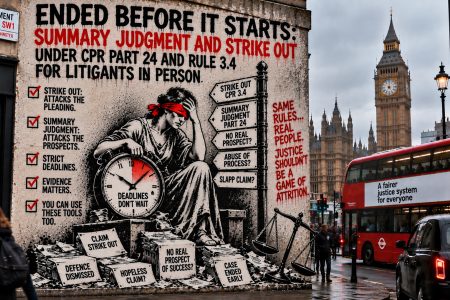
Ended before it starts: summary judgment and strike out under CPR Part 24 and rule 3.4 for litigants in person

Two applications can end a civil case before it ever reaches trial. This guide explains the difference between strike out under CPR rule 3.4 — including the new SLAPP ground — and summary judgment under Part 24, the notice and evidence deadlines both sides must meet, and how a litigant in person can resist an application or use the same procedure against a hopeless claim or defence.

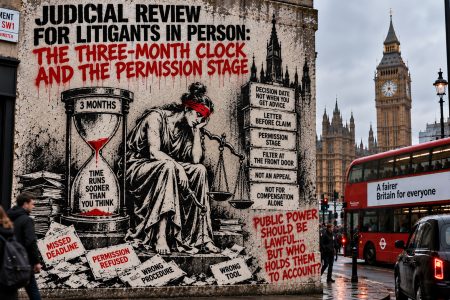
Judicial review for litigants in person: the three-month clock and the permission stage

Judicial review is often the only route for challenging a public body’s decision — but every claim needs the court’s permission, and the three-month clock runs from the decision itself, not from when you first get advice. This guide explains what judicial review can reach, how the pre-action protocol works, what the permission filter screens for, and when another route is the better tool.