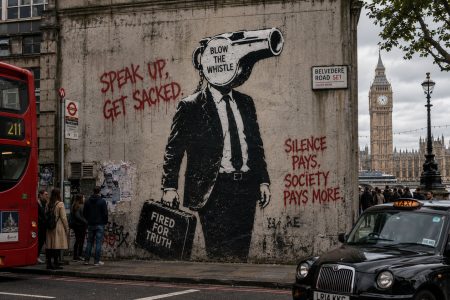

Judicial accountability · whistleblowing · Freemasonry transparency A new legal challenge over alleged judicial bullying has revived an old question: whether opaque networks, institutional loyalty and unfinished reforms leave whistleblowers facing more than their formal opponents. No grand conspiracy is proved, but the absence of disclosure leaves public trust exposed. Jurisdiction: United Kingdom Focus: JCIO, … Continue reading “Unmasking an ‘Old Boys’ Club’: Freemasonry, Whistleblowers and the UK Justice System”
Employment tribunals were meant to be accessible for all, but unrepresented claimants—known as Litigants in Person—face a justice system that’s structurally rigged.
The Investigatory Powers Tribunal (IPT) is the UK’s only judicial body empowered to oversee complaints against state surveillance and covert activities by intelligence agencies, police forces, and local authorities.
AI is revolutionising UK civil litigation, but risks of bias, confirmation bias, and threats to due process raise serious concerns for fairness and justice.
Discover the key obstacles UK Litigants in Person face and practical strategies to overcome them.
When I wrote The Chimp, The Computer, and The LiP, I drew heavily on The Chimp Paradox, a book that explains how emotions and logic collide under pressure. The 48 Laws of Power by Robert Greene serves a similar purpose—especially for Litigants in Person (LiPs) navigating high-stakes litigation. Legal battles often feel overwhelming due to procedural complexities, tight deadlines, and aggressive opposition. Greene’s insights on power dynamics can help LiPs maintain strategic control without falling into ethical traps. This article explores five of his most relevant “laws,” adapted for self-representation, ensuring compliance with court rules while maximizing tactical advantage.
Discover how The Chimp Paradox can help Litigants in Person control emotions, think strategically, and improve their legal success.
Over-relying on AI in court proceedings can lead to serious legal missteps, from misinterpreted case law to procedural errors—human oversight is essential.
In an era where justice is increasingly elusive, a disturbing trend has emerged—not from misguided litigants in person (LiPs), but from the legal teams representing powerful respondents.
Litigants in Person · Civil Restraint Orders · Litigation Strategy A Litigant in Person can begin with a genuine sense of injustice and still end up in procedural danger. The Civil Restraint Order trap opens when persistence turns into repetition, every setback becomes proof of bias, and applications are made without legal merit. Jurisdiction: England … Continue reading “Litigants in Person and the Civil Restraint Order Trap”