
The received wisdom says there are no costs in the employment tribunal. The truth is narrower: costs orders exist, they are rare, and they are aimed at conduct — vexatious, abusive or unreasonable behaviour and hopeless cases — not at losing. This guide walks through rule 74 of the Employment Tribunal Procedure Rules 2024, the Court of Appeal’s approach in Yerrakalva, the £20,000 cap and preparation time rates, and what the published tribunal statistics can and cannot tell us about how rare these orders really are.
Employment Tribunals have broad powers to support vulnerable parties. But an impaired litigant in person may struggle to identify the barrier, explain its functional effect and provide the evidence needed for a proportionate adjustment.
Employment Tribunal proceedings do not inevitably cause mental illness. But for a litigant in person, self-representation can add anxiety, cognitive load and procedural pressure to an already damaging workplace dispute.
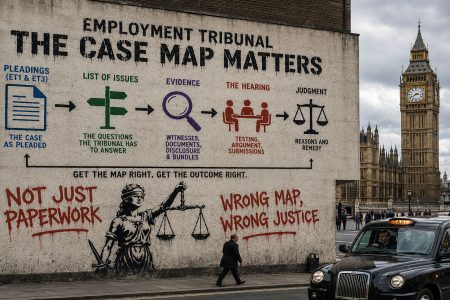
The ET1 is more than an Employment Tribunal claim form. It is the first point where a workplace story becomes a case, shaping the issues, respondent response, evidence, amendment risk and access to justice.
A list of issues is not administrative decoration. It is the point where the pleaded case is translated into the questions the Tribunal is being asked to decide.
Employment Tribunal judgments are not just results. Legal Lens explains why reasons matter and what parties should check after judgment.
Closing submissions are argument, not evidence. Legal Lens explains how to structure final hearing submissions in Employment Tribunal claims.
Employment Tribunal · Witness evidence · Cross-examination A witness statement matters, but it is not the end of the evidence. In an Employment Tribunal, a witness may still have to answer questions about documents, dates, decisions, memory, motive and disputed allegations. Cross-examination is where written evidence is tested. Category Employment Tribunal guidance Jurisdiction Great Britain … Continue reading “Employment Tribunal cross-examination: why your witness statement is only the start”
A witness statement can feel like the moment to say everything. But in an Employment Tribunal, it is evidence, not argument. Used badly, it can introduce new issues too late, blur the case, create fairness problems and turn final hearing preparation into a procedural dispute.
A hearing bundle can look like the case, but it is not the case. It is the working file of documents the Employment Tribunal uses to follow the issues, evidence and cross-examination at the hearing.