
 Written by
 Legal Lens Platform · casework software · early access
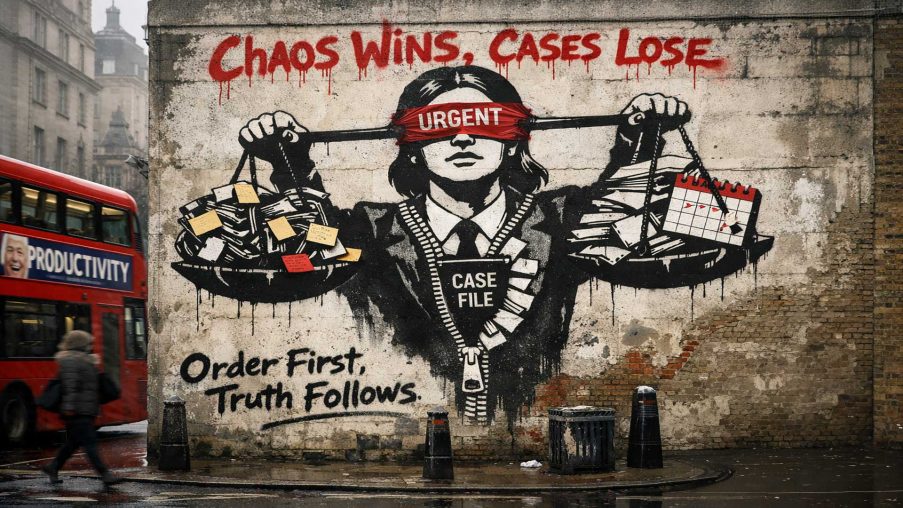
Most legal problems do not fail because someone “didn’t know the law”. They fail because the work becomes unmanageable: scattered documents, unclear issues, a chronology that lives in someone’s head, deadlines on scraps of paper, and correspondence threads that disappear at the worst possible moment.
What Platform is being built to do
- Create a single casework spine connecting cases, evidence, tasks, deadlines and outputs.
- Help litigants in person, advice workers, paralegals and professionals move from scattered material to coherent case files.
- Provide structured workflows for chronologies, issues lists, templates, correspondence, research and SAR tracking.
- Use AI where useful, but with guardrails, provenance and user confirmation steps.
The operational problem
Most legal problems do not fail because someone “didn’t know the law”. They fail because the work becomes unmanageable: scattered documents, unclear issues, a chronology that lives in someone’s head, deadlines on scraps of paper, and correspondence threads that disappear at the worst possible moment.
That is true for litigants in person, advice workers, paralegals, and—frankly—many professionals dealing with high volumes and imperfect information.
I am building an app called Platform, launching on legallens.org.uk, to address that operational reality.
What Legal Lens is trying to fix
If you have ever tried to move from “I have a situation” to “I have a coherent case file”, you will recognise the friction.
Chronology
You need a reliable chronology, but the facts are spread across emails, PDFs, call logs, messages and notes.
Issues
You need an issues list, but it keeps changing as evidence arrives.
Drafting
You need letters and follow-ups, but every template lives in a different place and every draft risks missing a key fact.
Research
You need research, but it is hard to keep track of what you relied on and why.
Tasks and deadlines
You need to track tasks and deadlines, but the tool you use for that has no connection to your documents or outputs.
Platform is designed around a simple idea: one workspace “spine” that connects cases, evidence, tasks, deadlines and outputs — so you can see what you have, what you still need, and what needs to happen next.
What Platform will do: MVP scope
Platform is being built as an integrated platform with a small number of modules that share the same underlying case and evidence structure.
Case Management
You can create a case with a short wizard covering basics, parties and key dates, then work from a single case home that links your evidence, timeline, tasks and outputs. The core MVP workflows include a chronology builder and an issues list, both user-entered and linked to supporting evidence where available. You will be able to export your chronology and issues list so they are usable outside the app.
Templates and correspondence
Drafting is not just writing. It is making sure the right facts are included, the right asks are made, and the follow-up is not forgotten. Platform includes a structured template flow: select a template, populate fields, pass through a verification checklist, then save the output into your evidence library and optionally create a follow-up task.
AI Assistant: Giles
Where AI can help, it should do so transparently. Giles is designed to work in a consultation workspace where you choose jurisdiction and purpose: explain, draft, checklist, strategy, summarise or review. You can optionally attach documents from your evidence library. Outputs are structured as findings, risks, next actions, key gaps and sources or citations where available.
Legal Research
Research is only useful if you can retrieve it, explain it and link it to the issue it supports. The research module focuses on search, result cards with essential metadata, saved collections, notes, case links and exportable research collections. If AI summarisation is used, it is labelled as a summary rather than authority and stored with provenance.
SAR Manager
Subject access requests often fail in practice because the scope, correspondence and follow-ups are poorly documented. The SAR workflow is designed to help draft the initial request, log correspondence, store responses, and maintain a timeline and task list so you can evidence what happened and when. It supports compliance and escalation record-keeping; it does not replace legal judgement about scope, exemptions or next steps.
What Platform will not do
It is important to be clear about this from day one.
Not legal advice
- Platform is productivity software.
- It is not a regulated legal service provider.
- It is not a substitute for legal advice.
Not a legal determination engine
- It will not determine privilege or legality for you.
- “Privileged” is a user-applied confidentiality label to help manage sensitive material.
- That label is not a legal determination.
Not automatic limitation advice
- Platform will not infer limitation periods or procedural deadlines in the MVP.
- You enter key dates.
- The system helps you track what you decide matters.
Reliability-first design
If you are going to use software outputs in a dispute context, you need to know where they came from and what they relied on.
Platform is being built with reliability-first principles: clear provenance for generated outputs, an audit trail for key actions including changes, exports and confirmations, and explicit user-responsibility checkpoints at the moments where people are most likely to over-rely on a tool.
Who this is for
If you are a litigant in person trying to keep your case coherent, an advice worker managing multiple files, a paralegal who needs structure and exportable outputs, or a solicitor or barrister receiving a messy case and wishing it came with a clean chronology and issues bundle, Platform is being built with your reality in mind.
Litigants in person
For people trying to keep facts, evidence, dates and correspondence coherent while carrying a case themselves.
Advice workers
For high-volume support work where structure, exportable outputs and follow-up discipline matter.
Paralegals and caseworkers
For building chronologies, issues lists, correspondence and research collections from messy input material.
Solicitors and barristers
For receiving cleaner case files, clearer issues and better organised evidence from clients and support organisations.
How you can help
I am now starting to share progress publicly ahead of launch on legallens.org.uk. If you want early access, or you want to pressure-test the workflows — chronology, issues, templates, SAR tracking and AI guardrails — message me or comment with what you would most want the first version to do well. If you deal with LiP support, employment disputes, whistleblowing, SARs or high-volume casework, your feedback will be especially useful.
Disclaimer
This article is for general information and marketing purposes only. It is not legal advice and should not be relied upon as such. Platform is productivity software and does not provide regulated legal services. Any examples or workflows described are illustrative and may change before launch. You remain responsible for checking facts, deadlines and the suitability of any documents or actions for your specific circumstances. If you need advice on your legal position, you should consult a qualified solicitor or barrister.