
 Written by
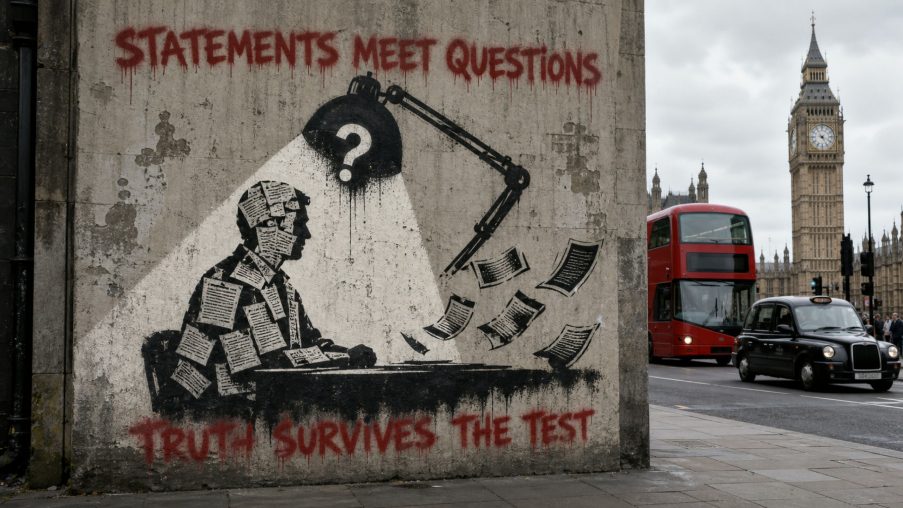
 A witness statement matters, but it is not the end of the evidence. In an Employment Tribunal, a witness may still have to answer questions about documents, dates, decisions, memory, motive and disputed allegations. Cross-examination is where written evidence is tested.
Publication snapshot
- A witness statement may stand as the witness’s main evidence, but it can still be tested by questions.
- Cross-examination should be relevant, fair and controlled; it is not a speech or a shouting match.
- Documents are often the point at which memory, consistency and decision-making are tested.
- Vulnerability, sensitive allegations, remote evidence and overseas witnesses should be raised early, not left to the final hearing.
The statement is only the start
In many Employment Tribunal cases, the witness statement is the witness’s main written account of what happened. Where a Tribunal has ordered witness statements and the witness is called to give evidence, the statement will often stand as that witness’s evidence in chief, unless the Tribunal orders otherwise.
That does not mean the witness is immune from questions. The other side may still challenge the statement. The Tribunal may also ask its own questions. The statement is evidence, but the Tribunal still has to decide what evidence it accepts, what weight it gives it, and what findings it makes.
The common trap
“My statement says it all” is rarely enough. A statement may set out the account, but cross-examination tests whether that account survives documents, dates, inconsistencies and competing explanations.
A claimant may have explained events in detail. A respondent may have produced a manager’s statement explaining the decision. That may be important, but it does not prevent the other side from putting relevant questions. Evidence is not simply filed. It may have to survive scrutiny.
This article concerns Employment Tribunal practice in Great Britain. It does not address Northern Ireland tribunal procedure. Where England & Wales Presidential Guidance is relevant, Scottish cases should be checked against the Scotland-specific position.
What cross-examination is
Cross-examination is questioning by the other side. Its purpose is to test evidence. It may be used to challenge a witness’s account, put a different version of events, explore documents, reveal inconsistency, test memory, or put serious points that the party asks the Tribunal to accept.
It is not theatre. It is not a free-for-all. It is not an opportunity to make speeches at a witness. A question should give the witness something clear to answer.
Cross-examination can properly test
- whether a witness remembers an event or is reconstructing it;
- whether a document contradicts the statement;
- whether the witness knew about a grievance, disability, disclosure or complaint;
- whether the stated reason for a decision was the real reason;
- whether a serious allegation is accepted or denied.
It should not become
- a five-minute speech followed by “isn’t that right?”;
- repetition of points already answered;
- irrelevant background argument;
- personal attack or intimidation;
- an attempt to argue closing submissions through the witness.
A claimant may need to put to a manager that the stated dismissal reason was not the true reason. A respondent may need to put to a claimant that their account of a conversation is wrong. A party may need to ask why a witness’s statement omits a document that appears to matter.
The key discipline is to ask questions that test the evidence, not to repeat the whole case.
The Tribunal controls the process
The Employment Tribunal controls the hearing. It may regulate procedure, ask questions, limit evidence, manage time, and stop questioning that is irrelevant, repetitive, oppressive, confusing, misleading, disproportionate or unfair.
That does not mean cross-examination is optional whenever it is inconvenient. A party should usually have a fair opportunity to challenge material evidence being relied on against them. The balance is between fairness to the party asking the questions and fairness to the witness being questioned.
Difficult is not the same as improper
A relevant question may be uncomfortable. It may challenge a witness. It may put a serious allegation. That does not make it improper. But questioning can become improper if it turns into harassment, repetition, intimidation or irrelevant argument.
The Tribunal’s role is not to give each side unlimited time. Its role is to decide the case fairly and justly. That may require allowing difficult questions. It may also require stopping questioning that has gone too far.
This is especially important where hearings are tightly listed. A party who spends too long arguing about background events may run out of time before reaching the issues that matter.
Documents, memory and reconstruction
Documents often do the hardest work in cross-examination. A witness may be taken to an email, policy, meeting note, investigation record, occupational health report, absence record, grievance outcome, disciplinary letter, appeal decision, rota, message or spreadsheet.
The question may be simple: did you write this? Did you receive it? Was it sent before the meeting? Why does your statement not mention it? Does this document record something different from what you now say?
Memory is not the same as reconstruction
“I remember saying that” is different from “I think I would have said that.” “I saw the email at the time” is different from “I have seen it in the bundle.” The distinction can affect credibility.
A manager may assume they considered a policy because they usually would. A claimant may assume a decision was linked to a grievance because the timing was close. A colleague may assume a manager knew about a disability because others in the workplace knew. Those assumptions may be right or wrong. Cross-examination tests them.
Tribunals understand that memory is imperfect. They are usually less assisted by witnesses who pretend to remember what they do not. A careful witness separates memory, inference, assumption and later reconstruction.
The bundle problem
A witness who cannot find the document may struggle. A party who cannot give page references may waste time. A witness who has not read the key documents may be caught out. Bundle discipline is part of evidence discipline.
Serious allegations
Some allegations are serious. A party may say that a witness lied, fabricated evidence, acted in bad faith, gave a false reason, concealed documents, invented a complaint, or dismissed someone for a discriminatory reason.
Those points should not be thrown around casually. If a party wants the Tribunal to make a serious adverse finding, the substance of the allegation should usually be put clearly enough for the witness to answer.
Put serious points fairly
- identify the allegation in plain terms;
- put the relevant document or event to the witness;
- allow the witness to accept, deny or explain it;
- avoid vague accusations;
- do not save the point for closing submissions if it should have been tested.
Avoid overreach
- not every inconsistency proves dishonesty;
- not every missing document proves fabrication;
- not every emotional answer is unreliable;
- not every poor decision proves discrimination;
- not every mistake proves bad faith.
The important question is practical: did the witness understand the serious case being put and have a fair opportunity to respond? That principle protects both sides.
Litigants in person
Cross-examination is difficult for litigants in person. A party may want to explain rather than ask. They may think that every unfair event must be put to every witness. They may not understand why the judge asks them to “put the question” or “move on”.
That can feel restrictive, but it is usually about keeping the hearing fair and focused. The Tribunal may explain the process, help identify issues, ask a party to rephrase, or intervene to prevent confusion. But the Tribunal does not become the party’s advocate.
Identify the issue
Start with the list of issues or the factual dispute this witness can address.
Find the document
Use page references and put the relevant document to the witness directly.
Ask the question
Ask one clear question at a time. Avoid speeches and compound questions.
Move on
Once the answer is given, decide whether a short follow-up is needed. Do not argue endlessly.
A litigant in person is entitled to fairness. They are not entitled to ask irrelevant questions for hours, bully a witness, ignore the list of issues, or use cross-examination as a substitute for submissions.
Fairness is not a one-way rule. The Tribunal must manage both sides.
Vulnerable witnesses
Some witnesses need adjustments. A witness may have a disability, mental health difficulty, trauma response, communication difficulty, neurodivergence, anxiety, language difficulty or another vulnerability affecting participation or the quality of evidence.
That matters in cross-examination. Long questions, rapid questioning, repeated challenges, aggressive tone, legal jargon and unexpected documents may undermine participation and the quality of evidence.
Adjustments are not avoidance
The purpose of adjustments is not to prevent evidence being tested. It is to allow fair participation and best evidence. A vulnerable witness may still need to answer questions, but the Tribunal may control how that questioning happens.
Possible measures may include breaks, shorter questions, adjusted timing, remote participation, screens, judge-led questioning, written questions, an interpreter, communication support, limits on repetition, or tighter control of intimidating or confusing questioning.
Sensitive allegations require particular care. Sexual harassment, sexual misconduct, stalking, domestic-abuse background, psychiatric injury, disability-related evidence and medical evidence may require adapted questioning or case-management directions. In some cases, personal cross-examination by the person accused of misconduct may be inappropriate or unfair. The answer is fact-sensitive.
Parties should raise vulnerability early. Leaving it until the hearing day may be unfair to the witness, unfair to the other side and difficult for the Tribunal to manage.
Remote and overseas evidence
Remote hearings can work well, but they create practical risks. A witness giving evidence by video needs to hear the questions, be heard, see the relevant documents, follow page references, understand the oath or affirmation, and give evidence without being coached or influenced.
Remote evidence is not unfair simply because it is remote. But the process must work well enough for the witness to participate and for the evidence to be tested.
Remote evidence checks
- Does the witness have the correct bundle?
- Can they see the statement and documents?
- Is the internet connection stable?
- Is the room private and suitable?
- Do they understand they must not be coached while giving evidence?
Overseas evidence checks
- Is the witness outside the United Kingdom?
- Has the issue been raised with the Tribunal early?
- Is there any legal or diplomatic barrier?
- Is written evidence an alternative?
- Has the Tribunal given directions?
Evidence from abroad is a separate issue. It should not be treated as ordinary video evidence. A witness outside the United Kingdom, Crown Dependencies or British Overseas Territories may raise additional questions about whether oral evidence can lawfully and fairly be taken from that country.
Do not leave overseas evidence to the hearing day
Ordinary remote participation from within the United Kingdom is one issue. Oral evidence from abroad is another. If the witness is abroad, raise it early and seek directions.
Preparation flow
Good cross-examination is selective. It does not ask everything. It asks what matters.
Start with the issues
Which part of the list of issues does this witness actually address?
Identify the necessary challenge
What fact, document, inconsistency or allegation must be put to this witness?
Prepare page references
Know exactly where the relevant email, note, policy or statement appears in the bundle.
Use short questions
Ask one point at a time. If the question needs a paragraph of explanation, rewrite it.
Protect the hearing time
Do not use all your time on background. Reach the disputed evidence that matters.
Claimants should prepare to answer questions, not just file a statement. Respondents should prepare to test evidence fairly, not treat cross-examination as intimidation or advocacy theatre. Both sides need to understand the documents.
The Legal Lens point
A witness statement is only the start. The hearing is where evidence may be tested.
That does not mean cross-examination is a theatrical ambush. It does not mean a party can ask anything, for as long as they want, in whatever manner they choose. The Tribunal controls the process. It may stop irrelevant questioning, limit repetition, protect vulnerable witnesses, manage time, ask its own questions and adapt procedure where fairness requires it.
But the evidence still matters. A witness who has made a statement may need to explain it. A document may need to be put. A serious allegation may need to be answered. A disputed account may need to be tested.
For claimants, the lesson is to prepare to answer questions, not just to file a statement. For respondents, the lesson is to test evidence fairly, not to use cross-examination as pressure. For both sides, the point is the same: evidence is not simply filed. It may have to survive being tested.
Get a free written assessment before evidence is tested at the hearing
Send your pleadings, witness statements, bundle index or hearing order, and Legal Lens can identify the key evidence risks, cross-examination issues and practical preparation steps before the final hearing.
No obligation. Independent Legal Lens consultancy. This is not a regulated solicitors’ firm.