
 Written by
 Not every angry client is a high-conflict client. But anyone who does contentious, employment, whistleblowing or regulatory work for long enough will meet clients who do not just bring a problem; they bring a pattern.
Many people arrive with good reason to be upset. They have been ignored, mishandled, under-advised or ground down by process. Some are litigants in person who have spent months carrying a case alone. They need clarity, translation and structure. They do not need to be labelled.
A high-conflict dynamic is different. It is the repeated conversion of process into personal grievance: every limit becomes an accusation, every disagreement becomes bad faith, every request for evidence becomes hostility, and every attempt to narrow issues becomes betrayal.
That distinction matters. We should not medicalise conflict or mistake access needs for misconduct. But neither should we pretend that endless escalation is just part of good client care.
In my experience, the problem is not the first angry email. It is what follows: instructions that keep changing, settled points reopened, pressure to advance allegations that cannot be proved, hostility when independent advice is not the advice the client wanted, and growing demands on time that are out of all proportion to the legal task.
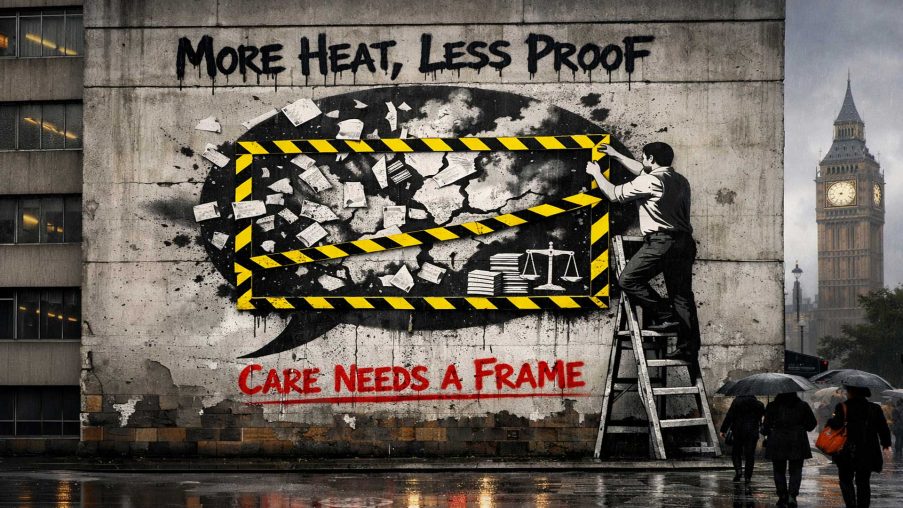
The reflexive professional response is often to give more: more access, more exceptions, more explanation, more drafting, more emotional labour. Sometimes that helps. In a genuinely high-conflict retainer, it often makes matters worse, because it rewards escalation and weakens the frame around the work.
My approach is simple. Do not manage the emotion. Manage the process.
- Define the job in writing – Be exact about scope. What are you advising on? What sits outside scope? What evidence do you need before you can advise further? What is the next decision point? Loose retainers create loose expectations.
- Set service levels early – Who is the point of contact? How often will updates be given? What counts as urgent? What will happen if the client sends five emails on the same point? These questions feel awkward at the start. They are much worse later.
- Separate narrative from proof – A compelling story is not automatically a viable claim. A client may feel certain and still be wrong on evidence, remedy or risk. The adviser’s job is not to echo every conclusion. It is to identify what can actually be proved and what is noise.
- Repeat advice consistently – Do not redraft the same allegation ten times because the client wants a harsher or more moral tone. Advice should change when the evidence changes, not when the temperature changes.
- Do not become emotionally enlisted – Once the adviser starts reacting rather than analysing, independence starts to go. The client may want outrage, but the case needs judgment.
- Warn early when the retainer is drifting – If conduct becomes abusive, oppressive to staff, or incompatible with proper advice, say so plainly. Identify the behaviour. Explain the boundary. Explain the consequence if it continues.
- End the relationship properly if it becomes unworkable – No silence. No retaliatory tone. No abandonment at a critical stage if it can reasonably be avoided. Give warning, record reasons, confirm the position in writing, and signpost the complaint route where appropriate.
Good client care is not boundary-free service. It is clear scope, clear advice, clear records, clear warnings and clear exits.
That protects the professional. More importantly, it protects the integrity of the process.
We do clients no favours when a file becomes a theatre for grievance rather than a disciplined route to evidence, remedy and resolution. That is the line I try to hold.
Legal disclaimer: This article is for general information only and does not constitute legal advice. It reflects practice-based observations and should not be relied upon as a substitute for independent legal or professional advice on specific circumstances.