
 Written by
 Employment Tribunal guidance
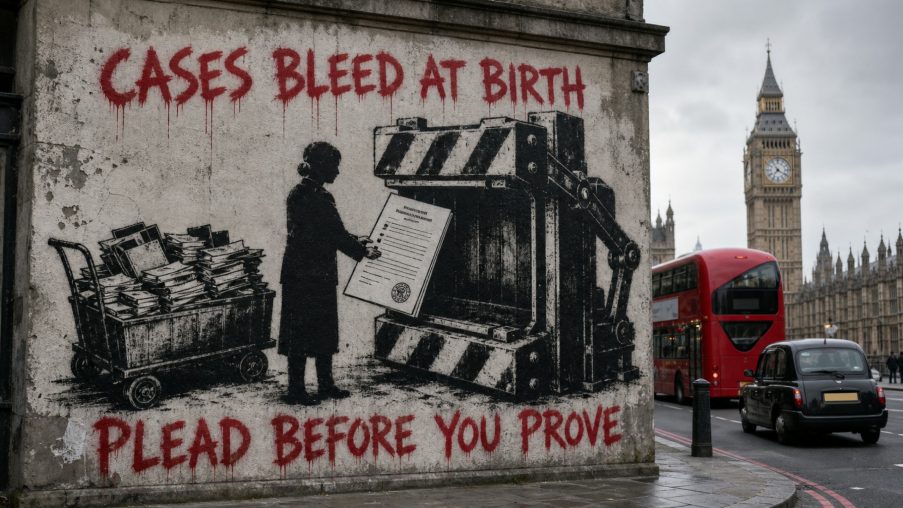
The first battlefield in an Employment Tribunal claim is often not the final hearing. It is the claim form, the attached particulars and the early procedural route that tells the Tribunal what legal dispute it is being asked to manage.
Publication snapshot
Why the ET1 matters before the evidence is heard
A claimant may arrive with the facts. A respondent may arrive with the procedure. That imbalance can begin long before witness statements, bundles or cross-examination. The ET1 does not have to read like a barrister’s pleading, but it must make the route of the claim visible enough for the Tribunal to manage it and for the respondent to answer it.
Many claimants tell the workplace story without translating it into identifiable legal complaints, dates, acts, omissions, respondents, loss and remedy.
Unclear claims are easier to challenge through requests for clarification, preliminary hearings, amendment objections, strike-out applications or deposit-order arguments.
The answer is not to over-lawyer the story. It is to build a claim document that gives the evidence a legally intelligible route.
Procedural imbalance
The imbalance starts before the hearing
A claimant who starts an Employment Tribunal claim often believes the case will be about what happened. That is understandable. They may have lost their job, raised concerns, been denied pay, faced discrimination, been disciplined, dismissed, forced out, ignored, sidelined or taken through a grievance process that went nowhere.
By the time they reach the Tribunal, the claim form can feel like the first real opportunity to have the facts examined by someone independent. The claimant may want the workplace story to be read as a whole: the emails, the meetings, the warnings, the conversations, the grievance, the appeal, the dismissal letter and the financial consequences that followed.
But the first battle is not always about the final version of the facts. It may be about whether the claim has been framed in a way the Tribunal can identify, manage and determine. It may be about whether the respondent can understand the case it must answer. It may be about whether the claim is in time, whether the right respondent has been named, whether the legal basis is clear, whether the alleged acts are identified and whether the remedy has been explained.
That is where the imbalance begins. A claimant litigant in person may still be trying to explain the workplace history. A represented respondent may already be looking for limitation points, jurisdiction arguments, missing dates, unclear allegations, weak causation, wrong respondents, unparticularised discrimination complaints, unidentified protected disclosures, speculative remedy claims and opportunities to narrow the case before the evidence is ever heard.
This is not an argument that respondents are wrong to defend claims robustly. It is not an argument that preliminary hearings, applications, strike-out arguments or deposit-order applications are inherently improper. They are part of the Tribunal’s procedural toolkit and may be necessary in cases that are unclear, weak, abusive, non-compliant or impossible to try fairly.
The problem is more subtle. Procedure is neutral in theory. It is not always equal in practice. A represented respondent may understand the procedural terrain from the outset. A claimant litigant in person may only discover it when the respondent begins to use it.
The claimant experiences the dispute as a sequence of events, decisions, conversations, losses and unresolved grievance points.
The Tribunal needs to see the legal complaints, the pleaded acts, the relevant dates, the respondent and the remedy being sought.
The respondent may challenge uncertainty, time limits, jurisdiction, amendment, causation, calculation and whether particular allegations can proceed.
Story versus issue
The claim is not just a story
The ET1 is the form that starts an Employment Tribunal claim. Claimants often attach grounds of claim, particulars, a chronology or supporting narrative. Those documents are frequently written under pressure, close to a deadline, after months or years of workplace conflict and without legal help. That context matters.
A claimant should not be expected to write like counsel. Employment Tribunal procedure is intended to be accessible. A worker should not lose a real claim merely because they used ordinary language, chose an imperfect label or explained events in a way that does not look like a formal pleading.
Accessibility, however, does not mean the claim can safely remain a general story of unfairness. The Tribunal still needs to know what legal complaint is being brought. The respondent still needs to know the case it must answer. The claim still needs to identify the acts, omissions, decisions, dates, people, legal basis, loss and remedy with enough clarity for the case to be managed fairly.
That is the discipline many claimants are not warned about. A workplace story may explain why the claimant feels wronged. A claim document must go further. It must make the legal case visible.
Story
“I was treated badly.”
That may be true and important, but the Tribunal still needs to understand what legal claim that treatment is said to support.
Route
“This treatment is unlawful because…”
The claim needs to identify the legal complaint, the factual acts relied on, the connection between them and the remedy being sought.
A claimant who says “I was discriminated against” still needs to identify the protected characteristic, the treatment complained of, when it happened, who was involved and why the treatment is said to be connected to that characteristic.
A claimant who says “I blew the whistle” still needs to identify the disclosure relied on, what information was disclosed, what wrongdoing it tended to show, why public interest is said to arise and what detriment or dismissal is said to have followed.
A claimant who says “I am owed money” still needs to explain the period, the sum due, the sum paid, the shortfall and the calculation. A claimant who says “I was unfairly dismissed” still needs to explain whether the challenge is to the reason for dismissal, the process, the decision, the appeal, consistency, sanction, remedy or some combination of those points.
The claimant does not need to prove all of that at the beginning. But the claimant does need to identify the route. The first document is not just the claimant’s story. It is the architecture of the case.
Substance and limits
The Tribunal looks at substance, but the facts must be there
Employment Tribunal claims are not drafted with the same technical expectations as High Court pleadings. That is especially important where the claimant is a litigant in person. A Tribunal should read the ET1, attached particulars and core claim documents fairly and as a whole.
If the facts clearly point to a legal complaint, the claimant’s failure to use the perfect label should not automatically defeat it. Many workers know what happened to them long before they know the legal category. They may describe constructive dismissal without using that phrase. They may set out facts that raise disability-related issues without understanding the difference between direct discrimination, discrimination arising from disability and failure to make reasonable adjustments. They may describe a protected disclosure as a complaint, a grievance, a safety concern or a report to management.
The law allows some space for substance over form. That protection matters because access to justice would be hollow if ordinary workers had to plead like specialist employment lawyers before their cases could be understood.
But that space has limits. The Tribunal can clarify a claim that is fairly raised. It cannot invent a factual case that is not there. It can recognise the legal consequence of facts the claimant has set out. It should not build a new claim from facts introduced later without proper procedural handling. It can help identify the issues. It cannot become the claimant’s advocate.
Wrong label and missing facts are not the same problem
A claimant may describe facts that clearly raise a legal issue but use the wrong term. That may be capable of clarification, depending on the case.
If the facts needed to identify the claim are absent, later evidence may not cure the problem without an amendment route.
That distinction matters because many claimants assume that later evidence will fix an unclear ET1. They may think the witness statement is where the real case will finally be explained. They may believe that if they have the emails, documents or recordings, it does not matter whether the claim document was precise.
That is risky. A witness statement is evidence. It should support the claim. It should not introduce the essential claim for the first time. A skeleton argument is submission. It should explain the legal argument. It should not quietly add a new claim. A list of issues is a case-management tool. It should organise the case. It should not become a back door through which unpleaded allegations enter the proceedings without proper procedural handling.
A wrong label can often be addressed. Missing facts are different.
Early pressure points
Strike-out and deposit orders can become procedural pressure points
The Employment Tribunal has powers to manage, filter and dispose of claims or parts of claims where the relevant legal tests are met. A claim, allegation or argument may face early scrutiny if it is said to be legally defective, unclear, non-compliant, outside jurisdiction, abusive, unmanageable or to have little reasonable prospect of success.
Those tools are not unfair simply because a respondent applies for them. The Tribunal system must be able to control cases that cannot sensibly proceed, and respondents are entitled to defend themselves against claims that are unclear, unsupported or procedurally improper.
For a claimant litigant in person, however, these tools can become early pressure points. A strike-out application may threaten to end all or part of the case before full evidence is heard. A deposit order may require the claimant to decide whether to continue with a specific allegation or argument that has been identified as weak, with possible consequences if that point later fails for the reasons already identified by the Tribunal.
A preliminary hearing may become the place where the claimant is expected to explain, under pressure, what the claim really is. The Tribunal should identify the specific claim, allegation or argument being tested before deciding whether any threshold is met. That is not a technical nicety. It is the difference between testing the actual claim and testing an assumed, incomplete or misunderstood version of it.
The respondent may ask the claimant to identify the acts, dates, legal basis, decision-makers, loss and remedy relied on.
The Tribunal may need to define the issues, consider time limits, give directions, list hearings or address applications.
Weak, unclear or legally defective points may be challenged before the final hearing, depending on the facts and the applicable test.
If the claimant later tries to add new claims, allegations, disclosures or detriments, the respondent may say an amendment is required.
That does not mean the claimant should panic. It means the claimant should understand the terrain. An unclear claim gives a represented respondent more to attack. If the ET1 does not identify dates, actors, protected characteristics, disclosures, detriments, dismissal theory, jurisdiction, remedy or calculation, the respondent may argue that parts of the claim are unclear or have no proper basis.
If the claim is sprawling, repetitive or built around broad accusations rather than pleaded facts, the respondent may argue that the Tribunal cannot sensibly manage it. If the claimant tries to add new allegations later, the respondent may argue that amendment is required and that the amendment should not be allowed.
The claimant may still have a real case. But a real case can be made harder by poor framing.
Claim structure
What the claim document must make visible
A good claim document does not have to be long. Some weak claims are long because they are unfocused. Some strong claims are concise because they identify the legal issue clearly. What matters is not length. It is visibility.
The claim document should make visible what happened, when it happened, who was involved, which respondent is legally responsible, what legal complaint is being brought, how the facts connect to that complaint, what harm or loss followed and what remedy is sought.
Unfair dismissal
The Tribunal needs to understand the dismissal theory. Was the claimant dismissed, or did they resign and say the resignation was caused by the employer’s conduct? Do they dispute the employer’s reason? Are they challenging investigation, procedure, sanction, consistency, appeal or the employer’s stated rationale?
Discrimination
The Tribunal needs more than a protected characteristic and bad treatment. It needs to understand what happened, who did it, when it happened, what protected characteristic is relied on and what facts suggest the treatment was because of, related to or arising from that characteristic.
Whistleblowing
The alleged protected disclosure must be made visible. The claim should identify the communication relied on, what information was disclosed, what wrongdoing it tended to show, why public interest is said to arise, who knew about it and what detriment or dismissal followed.
Money claims
The Tribunal needs the arithmetic. Wages, holiday pay, notice pay, commission, bonus, deductions, expenses and redundancy payments raise different questions. A money claim should identify the period, sum due, sum paid, shortfall and calculation.
The claimant does not need to attach every document or prove every allegation in the ET1. But the claim should show enough of the route for the Tribunal and respondent to see what the evidence will need to address.
The route also matters because not every unfair event is a separate legal claim. Some events are background. Some are part of a pleaded course of conduct. Some are evidential context. Some are remedy points. Some are separate allegations that need their own legal basis. A clear claim separates those functions before they become confused.
Evidence route
Particulars are not evidence
This is one of the most important distinctions for litigants in person. Particulars are not evidence. They are the route map for the evidence.
A chronology tells the Tribunal when things happened. Particulars explain why those events matter legally. Evidence then proves, qualifies or challenges the facts relied on. If the particulars do not identify the route, the evidence may have nowhere to go.
A claimant may have emails showing they complained to management. But if the claim does not identify which complaint is said to be a protected disclosure, what information was disclosed, what relevant failure it tended to show and what detriment followed, the respondent may argue that the whistleblowing claim is unclear or unsupported.
A claimant may have messages showing hostile treatment. But if the claim does not explain why that treatment is said to be connected to race, sex, disability, age, religion, sexual orientation, pregnancy, maternity, gender reassignment, marriage or civil partnership, the respondent may argue that the case is about bad treatment but not discrimination.
A claimant may have payslips showing underpayment. But if the claim does not explain the period, amount due, amount paid and calculation, the respondent may argue that it cannot answer the claim properly.
The evidence needs a pleaded destination
Documents, recordings, emails and witness evidence matter. But the claim document defines what that material is being used to prove. Without a pleaded route, evidence can become background noise rather than support for a defined issue.
That is why the early documents matter. The ET1, particulars and any attached chronology should help the Tribunal identify which facts are allegations, which are background, which are remedy points and which documents will later matter. They do not need to prove the case at the start. They need to make the case answerable.
Two-sided fairness
Fairness is still two-sided
This article is written from the claimant’s perspective, but the fairness point is not one-sided. A respondent is entitled to know the case it must answer. A company, charity, public body, small employer or individual respondent should not have to defend a shifting narrative that changes from ET1 to witness statement to skeleton argument.
Tribunal proceedings should not become a moving target where the respondent only discovers the real case months later. That is why clear pleading protects both sides. It protects the claimant because it reduces avoidable procedural attack. It protects the respondent because it gives fair notice. It protects the Tribunal because it enables proportionate case management. It protects the hearing because it makes the evidence relevant to defined issues rather than to a general sense of injustice.
A claimant litigant in person deserves fairness. They also need clarity. The Tribunal may read their documents fairly. It may help clarify what claims are being pursued. It may avoid treating poor legal terminology as fatal where the facts are there. But it cannot write the claim for them. It cannot invent allegations. It cannot allow every later point to become part of the case simply because the claimant now wishes to rely on it.
Access to justice is not achieved by pretending procedure does not matter. It is achieved by making procedure intelligible enough that claimants can use it and respondents can answer it.
The claimant should not be defeated by legal language alone where the facts and complaint are fairly identifiable.
The respondent should not have to defend an unclear, expanding or shifting case without fair notice.
The Tribunal needs defined issues so the case can be managed proportionately and decided on the evidence that matters.
Closing point
The Legal Lens point
The imbalance between claimant and respondent is not only about who speaks better at the final hearing. It is about who understands the battlefield earlier.
A claimant may think the fight begins when they walk into the hearing room. In many cases, it begins when they write the ET1. That first document is where the claimant must begin turning lived experience into a legally intelligible claim. It does not need to be perfect. It does not need to sound like a barrister wrote it. But it does need to identify the complaint, the facts, the dates, the respondent, the connection between what happened and the legal claim, and the remedy sought.
Getting the claim right does not win the final hearing. It does not prove the documents. It does not make the claimant a reliable witness. It does not answer cross-examination. It does not establish loss. It does not guarantee that the Tribunal will accept the claimant’s case.
The final hearing is a different battle. It involves witness statements, bundles, disclosure, cross-examination, credibility, contemporaneous documents, legal submissions, remedy evidence and the Tribunal’s findings. A well-structured ET1 cannot replace that work.
But it can help the case survive long enough for that work to matter. A clear claim document helps the Tribunal identify the issues. It helps the claimant resist the argument that the case is confused, speculative or unmanageable. It helps prevent the respondent from portraying the claim as an expanding narrative rather than a legally defined dispute. It gives the evidence a route. It makes the case answerable.
The claimant may arrive with the facts. The respondent may arrive with the procedure. The answer is not to abandon the claim or to over-lawyer the story. The answer is to build the claim properly from the beginning.
In Employment Tribunal litigation, getting the claim right at the start is not bureaucracy. It is the first act of case survival.
Source anchors
Source anchors for the procedural framework
These anchors support the general procedural framework used in this article. They do not decide any individual claim, deadline, amendment application, strike-out issue, deposit-order issue or remedy question.
GOV.UK guidance
Make a claim to an Employment Tribunal ET1 route, usual claim timing, Acas certificate, respondent details, fees and costs warning.Acas guidance
Early conciliation Acas explains early conciliation and the limits of what it can do for claim preparation.Judiciary guidance
Rules, Orders, Practice Directions and Guidance Official Judiciary page linking the 2024 Procedure Rules and the overriding objective.Legislation
Employment Tribunal Procedure Rules 2024 Primary procedural rules governing Employment Tribunal procedure, case management and applications.ET1 and tribunal route assessment
Get a free written assessment of the claim structure
If an ET1, draft particulars or early tribunal route is unclear, Legal Lens can give a preliminary written assessment of how the claim is structured, what the respondent is likely to challenge, and what documents are needed to make the issues visible.
Identify whether the ET1 separates background, legal complaints, dates, decision-makers, protected disclosures, protected characteristics, money claims and remedy.
Map the key documents against the issues so that emails, payslips, grievance records and dismissal documents have a clear procedural purpose.
Review the likely areas of clarification, amendment, limitation, jurisdiction, strike-out, deposit-order or list-of-issues pressure before the next tribunal step.
Independent Legal Lens consultancy. Legal Lens is not a regulated solicitors’ firm. A preliminary assessment is not a substitute for regulated legal advice where that is needed.